Valerie Murphy

The Art of Bringing People Together: Why Local Multiplayer Design Deserves More Recognition

The Magic Circle: How Great Party Games Create Instant Community

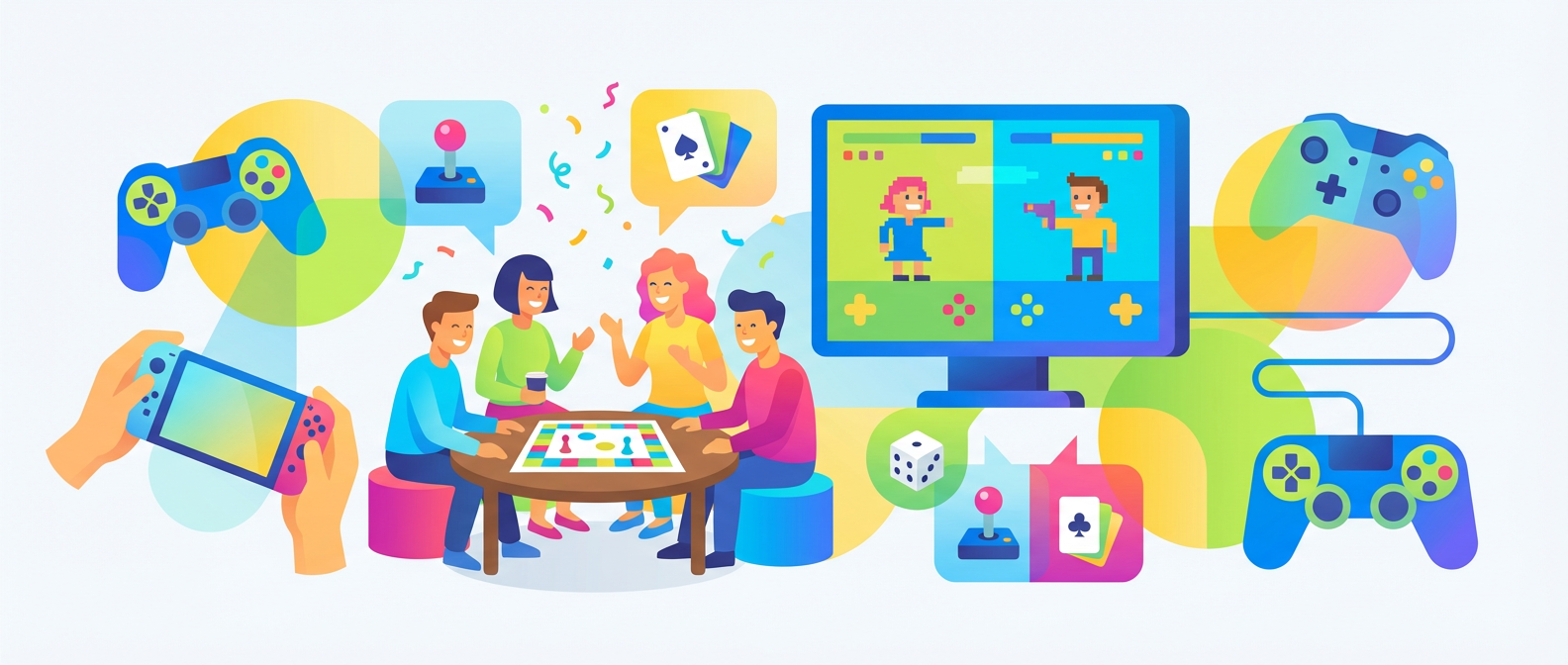
There’s something almost magical about watching four strangers huddle around a screen, controllers in hand, suddenly erupting into laughter within minutes. This transformation doesn’t happen by accident. The best local multiplayer games are masterclasses in social engineering, carefully crafted to break down barriers and create shared experiences. Take Overcooked, for example. Team17’s chaotic cooking simulator doesn’t just throw players into kitchens together. It creates a pressure cooker of communication where success depends entirely on coordination and trust.
The Art of Bringing People Together: Why Local Multiplayer Design Deserves More Recognition

The genius lies in its escalating complexity. Early levels teach basic mechanics through gentle cooperation, but soon you’re navigating moving platforms, dodging rats, and working around kitchen layouts that would make Gordon Ramsay weep. The game forces players to develop their own language of callouts and shortcuts. “Onions!” becomes a desperate plea. “Fire!” transforms from warning to accusation. This organic vocabulary building creates intimacy between players that goes far beyond what’s happening on screen.

What makes this design so effective is how it balances individual agency with collective responsibility. Each player controls their own chef, maintaining personal investment, but success requires the group to function as a synchronized unit. It’s a delicate balance that lesser games often miss. They either make players feel powerless or create scenarios where one skilled player can carry the entire team.
Illustration for The Art of Bringing People Together: Why Local Multiplayer Design Deserves More Recognition

Asymmetric Excellence: When Unequal Roles Create Perfect Harmony

Some of the most memorable local multiplayer experiences come from games that deliberately give players different roles, tools, or perspectives. Keep Talking and Nobody Explodes by Steel Crate Games is the pinnacle of this approach. One player stares at a bomb with various modules, switches, and wires, while others frantically flip through a manual filled with disarmament instructions. The catch? The bomb defuser can’t see the manual, and the manual readers can’t see the bomb.

This forced information split creates natural drama and tension. The person with the manual becomes the expert, but they’re completely dependent on accurate descriptions from the defuser. Meanwhile, the defuser must translate complex visual information into words while fighting against a countdown timer. The brilliance is in how the game makes both roles equally important and equally stressful.

Hidden Agenda takes this concept even further by turning smartphones into secret voting devices for a crime thriller. Each player receives different information about characters and situations, making every choice feel like a small betrayal or alliance. The game doesn’t just work around different skill levels, it actively uses them as a feature. This creates natural conflict and discussion that enhances rather than detracts from the experience.

The Rhythm of Chaos: How Pacing Creates Memorable Moments

Great party games understand that energy management is just as important as core mechanics. Stick Fight: The Game by Landfall Games demonstrates this principle perfectly. Matches are deliberately short, usually lasting under a minute, but they’re packed with physics-based mayhem that generates endless highlight reels. Players grab weapons that spawn randomly, fight on destructible stages, and experience just enough chaos to feel exciting without becoming frustrating.

The key insight here is how the game uses its brevity to encourage experimentation and risk-taking. Because matches end quickly, players feel safe trying ridiculous strategies or pulling off dangerous maneuvers. A failed attempt to grab a laser sword while dangling from a crumbling platform becomes funny rather than infuriating because you’ll be back in action within seconds.

This pacing philosophy extends beyond action games. Jackbox Games has perfected the art of the quick round in titles like Quiplash and Drawful. Each prompt or drawing challenge takes just long enough for players to craft something clever, but never so long that energy dips or people lose interest. The voting phases provide natural breathing spaces where players can appreciate each other’s creativity and build on the social momentum.

Technical Elegance: The Invisible Infrastructure of Fun

Behind every great local multiplayer experience lies careful technical design that players rarely notice when it’s working well. Consider how Team Cherry approaches input handling in their smaller projects, or how indie developers like those behind TowerFall Ascension solve the fundamental challenge of making four-player combat feel fair and responsive on a single screen.

TowerFall’s design reveals layer after layer of thoughtful decisions. The camera work keeps all players visible without making anyone feel cramped. The arrow mechanics create a resource economy that prevents camping while rewarding skillful play. Most importantly, the controls are immediately accessible but contain enough depth for players to develop personal styles and improvement arcs.

Even something as simple as restart and rematch flows shows the developer’s understanding of social dynamics. The best party games make it trivial to jump into another round, recognizing that the magic happens in rapid iteration and the building of group stories across multiple sessions. Poor restart design or lengthy loading times can kill momentum and break the social spell these games work so hard to create.

Beyond the Screen: Design That Goes Past Digital Boundaries

The most successful local multiplayer games understand they’re competing not just with other video games, but with board games, party activities, and social media for people’s attention. Games like Spaceteam succeed because they create experiences that feel distinctly digital while encouraging the kind of face-to-face interaction that purely digital experiences can’t replicate.

What we’re seeing in the best contemporary party games is a recognition that the screen is just one element in a larger social experience. The real game happens in the negotiations, celebrations, and friendly arguments that occur between rounds. Developers who understand this create systems that generate stories players will retell long after the console is turned off.

The craft of local multiplayer design deserves recognition alongside other forms of game development artistry. These developers are solving complex problems of human psychology, technical constraints, and social dynamics simultaneously, often with smaller teams and budgets than their single-player counterparts. Next time you find yourself laughing uncontrollably at a friend’s poorly drawn interpretation of “existential crisis” in Drawful, take a moment to appreciate the invisible design work that made that moment possible.

What local multiplayer gems have created lasting memories in your gaming circles? I’d love to hear about the games that have brought your friends together, especially those hidden treasures from smaller developers that deserve more recognition.
The Lost Art of Physical Feedback: Why the GameCube Controller’s Z-Button Changed Everything

The Click That Started a Revolution

Picture this: you’re playing Super Mario Sunshine for the first time, and you need to spray water while moving the camera. Your finger finds that peculiar Z-button on the GameCube controller’s right shoulder, and something magical happens. The button doesn’t just press down like every other controller you’ve used. It clicks with this satisfying, tactile snap that somehow makes the action feel more deliberate, more connected to what’s happening on screen.

That little analog trigger with its distinctive clicking mechanism is something we’ve largely lost in modern gaming hardware. Nintendo didn’t just design a button here. They created a piece of physical vocabulary that spoke directly to your nervous system, turning the simple act of pressing a trigger into a conversation between your finger and the game world.

When Buttons Had Personalities

The GameCube controller is a masterclass in how physical design can enhance gameplay in ways that pure digital input never could. Those analog triggers weren’t just gimmicks. In F-Zero GX, you could feather the acceleration with the left trigger’s pressure sensitivity, feeling exactly how much gas you were giving your machine through the resistance in your fingertip. The right trigger’s click gave you a distinct shift point, like finding the sweet spot in a real car’s transmission.

Compare that to Luigi’s Mansion, where the pressure-sensitive triggers controlled your flashlight’s focus. Light pressure gave you a wide beam for general exploration, but pushing past that click narrowed the beam for precision work. Your thumb learned the language of the controller, and suddenly you weren’t just playing the game, you were having a physical conversation with it.

This kind of tactile feedback design has become increasingly rare. Modern controllers prioritize consistency and durability over character. The DualSense’s haptic feedback is impressive, but it’s digital simulation of physical sensation rather than actual mechanical feedback. There’s something irreplaceable about the way analog triggers taught your muscle memory exactly where each game’s sweet spots lived.

The Dreamcast’s Unsung VMU Revolution

While everyone remembers the Dreamcast for Shenmue and Jet Set Radio, the real innovation was hiding in plain sight on the controller itself. The Visual Memory Unit wasn’t just external storage with a tiny screen. It was Sega’s quiet revolution in how games could extend beyond the television, years before anyone conceived of dual-screen gaming or second-screen experiences.

Sonic Adventure used the VMU to raise your Chao pets when you weren’t actively playing the main game. You could take your little digital creature to work, school, or a friend’s house, caring for it during lunch breaks and watching it grow independently of the main game. This wasn’t a gimmick or an add-on feature. It was integrated design thinking that recognized gaming as something that could live in the spaces between traditional play sessions.

The VMU’s tiny screen also worked as a private display during multiplayer games. In NFL 2K, only you could see your play selection, eliminating the age-old problem of screen peeking during local multiplayer. Resident Evil: Code Veronica used it to display your health status privately, adding tension when you couldn’t quite tell if your friend was about to die without looking over at their screen.

Nintendo 64’s Analog Stick: The Birth of 3D Language

Before the N64 controller, 3D games were exercises in digital approximation. You moved in eight directions, maybe sixteen if you were lucky enough to have diagonal inputs. The analog stick didn’t just add precision. It created an entirely new vocabulary for how humans could communicate with 3D spaces.

Super Mario 64 is still the textbook example of analog control done right. Mario’s movement speed corresponded directly to how far you pushed the stick from center. Tilt it slightly, and Mario tiptoed. Push it halfway, and he walked with purpose. Slam it to the edge, and he sprinted with wild abandon. This wasn’t just more precise movement. It was the difference between typing on a keyboard and drawing with a pencil.

The controller’s unusual three-pronged design makes more sense when you consider it as Nintendo’s attempt to bridge two eras of gaming. The D-pad and face buttons worked for traditional 2D games, while the analog stick opened up 3D possibilities. You weren’t supposed to hold all three prongs simultaneously. You were supposed to choose your grip based on what kind of experience the game demanded.

Games like GoldenEye 007 proved that first-person shooters could work on consoles specifically because of that analog stick’s nuanced control. The precise aim adjustment that seemed impossible with digital controls became intuitive with analog input. Players developed muscle memory for exactly how far to push the stick for different types of shots, turning the controller into an extension of their spatial reasoning.

The Design Philosophy We’ve Forgotten

These controllers succeeded because their designers understood that hardware isn’t neutral. Every button placement, every trigger resistance curve, every tactile detail teaches players how to think about the games they’re playing. The best retro controllers didn’t just accept input. They guided players toward specific types of engagement with the virtual world.

Modern gaming hardware has largely moved away from this philosophy in favor of standardization and compatibility. There’s wisdom in that approach, but something valuable gets lost when every controller feels essentially the same. The GameCube’s unique button layout, the Dreamcast’s VMU integration, the N64’s analog precision – these weren’t just different ways to press buttons. They were different ways to think about what games could be.

The next time you pick up an old controller, pay attention to how it feels different from what you’re used to. Notice how it guides your hands toward certain types of movement, certain rhythms of play. These pieces of hardware aren’t just relics of gaming history. They’re archives of different philosophies about how humans and machines can communicate, waiting to teach us something about the roads not taken in gaming design.

When Dreams Hit Different: Catching Up with the Minds Behind Our Forgotten Favorites

The Games That Time Almost Forgot

You know that feeling when you’re digging through old forum posts and someone mentions a game that absolutely consumed your summer in 2009? That little jolt of recognition, followed immediately by the realization that barely anyone talks about it anymore? That’s exactly what happened when I stumbled across a recent interview with Maria Santos, the lead designer behind “Midnight Parcels,” an atmospheric puzzle-platformer that launched to critical acclaim but somehow vanished from the gaming conversation within two years.

When Dreams Hit Different: Catching Up with the Minds Behind Our Forgotten Favorites

Santos was refreshingly honest about the game’s trajectory. “We thought we were making the next ‘Braid,’” she laughed during our video call, her home office decorated with concept art from projects spanning the last decade. “Looking back, I think we were so focused on being profound that we forgot to be fun first.” This kind of retrospective clarity makes revisiting these “almost classics” so fascinating. The developers have had time to process not just what worked, but what they thought worked at the time versus what actually resonated with players.

The indie gaming world of the early 2010s was a completely different beast. Digital distribution was still finding its footing, Steam’s discovery algorithms were primitive, and social media marketing for games meant hoping someone with a decent following would tweet about your project. Santos and her two-person team at Neon Moth Studios were competing for attention in a space that rewarded either exceptional polish or exceptional weirdness. “Midnight Parcels” fell somewhere in the thoughtful middle ground that’s hardest to market.

Illustration for When Dreams Hit Different: Catching Up with the Minds Behind Our Forgotten Favorites

The Soundtrack That Deserves Another Listen

Here’s where things get interesting though. While “Midnight Parcels” might not have found its audience during its initial release, its soundtrack has lived an entirely separate life online. Composer Jake Morrison created something genuinely special with those ambient electronic pieces, and they’ve been quietly soundtracking study sessions and late-night coding marathons for years. “I still get emails about the music,” Morrison tells me. “Someone will say they’ve been listening to ‘Station 7’ for a decade and just wanted to say thanks.”

This disconnect between a game’s commercial performance and its cultural staying power is more common than we like to admit. Morrison’s tracks have racked up millions of streams across various platforms, often completely separated from their original context. People discover them through lo-fi playlists, ambient music compilations, or those “music to focus to” YouTube channels. The melancholic synth work that perfectly complemented the game’s themes of isolation and connection has found new life as background music for modern digital life.

When I asked Morrison if he felt vindicated by this unexpected longevity, he paused thoughtfully. “It’s bittersweet, honestly. I’m grateful the music found people, but I also know it hits different when you experience it alongside Maria’s level design. There’s this moment in the third act where the music and gameplay sync up perfectly, and I don’t think most people who know the soundtrack have experienced that.” It’s a reminder that game music, no matter how beautiful in isolation, was crafted to work within a larger interactive experience.

What We Got Wrong About Innovation

The more we talked, the more it became clear that both Santos and Morrison had learned some hard lessons about innovation that feel especially relevant today. “We were so caught up in doing something no one had done before that we forgot to ask if anyone actually wanted it done,” Santos admitted. “Midnight Parcels” had a unique mechanic where players could manipulate the emotional state of NPCs through environmental storytelling, but the implementation was so subtle that most players never fully grasped how to use it effectively.

This speaks to a broader tension in indie development during that era. The success of games like “Braid” and “Limbo” had proven that innovation and artistic vision could find commercial success, but it also created pressure to innovate just for the sake of it. Santos described spending months perfecting systems that maybe three percent of players would fully engage with. “We were designing for the most attentive, most patient players imaginable,” she explained. “That’s not necessarily wrong, but it’s definitely limiting.”

Looking at “Midnight Parcels” now, with over a decade of hindsight, you can see both its ambition and its blind spots. The environmental storytelling is genuinely sophisticated, with layers of narrative hidden in background details and NPC behavior patterns. But the core platforming, while competent, never quite reaches the level of joy that makes players want to share their experience with friends. It’s the difference between a game you respect and a game you evangelize.

The Long Game of Creative Legacy

What’s fascinating is how both developers have carried these lessons forward. Santos went on to work at several larger studios before returning to independent development last year, while Morrison has become a sought-after composer for indie projects. Their current work shows the influence of that “Midnight Parcels” experience, refined through years of understanding what players actually connect with versus what sounds good in a design document.

Santos’s new project, still in early development, applies the same thoughtful approach to environmental storytelling but builds it around more immediately engaging core mechanics. “I learned that you can hide complexity behind accessibility, but you can’t hide accessibility behind complexity,” she said. Morrison, meanwhile, has built a reputation for creating music that enhances gameplay without overshadowing it, a balance he admits took years to master.

There’s something valuable in these conversations with creators who’ve had time to process their work outside the immediate pressure of launch windows and review cycles. The honest assessment of what worked, what didn’t, and what they’d do differently creates space for more thoughtful discussions about game design and artistic vision. It’s the difference between promotional interviews and genuine reflection.

These stories matter because they remind us that the games we remember fondly weren’t always the games that dominated sales charts or review aggregators. Sometimes the most interesting creative work happens in those middle spaces, among developers trying to push boundaries while figuring out how to pay rent. If you’ve got memories of games that seemed to vanish too quickly, or soundtracks that outlived their source material, I’d love to hear about them. These conversations work best when they’re actually conversations.

The Builder’s Notebook: Creating Your Perfect Cozy Gaming Sanctuary

Understanding the Architecture of Comfort

Building a cozy gaming experience isn’t about finding the perfect game right out of the box. It’s about understanding how different pieces work together to create that warm, enveloping feeling we chase when life gets overwhelming. Think of it like designing a reading nook, but for your soul. The best cozy games share certain principles: they respect your time, offer meaningful but low-stakes progression, and create spaces you genuinely want to inhabit.

Start by identifying your comfort triggers. Do you find peace in repetitive motions like fishing in Animal Crossing or organizing inventory in Stardew Valley? Maybe it’s the satisfaction of watching numbers slowly tick upward, or the meditative quality of tending virtual gardens. These aren’t universal truths about cozy gaming. They’re personal blueprints for what makes your brain release those happy chemicals.

The magic happens when you stop forcing yourself to enjoy games because they’re labeled “cozy” and start building your own definition. I spent months trying to love Spiritfarer because everyone called it the ultimate comfort game, but its emotional weight left me drained. Meanwhile, I found unexpected coziness in the routine maintenance loops of Slime Rancher. Your cozy gaming sanctuary should feel like coming home, not like homework.

The Daily Ritual: Establishing Your Gaming Rhythm

The most sustainable cozy gaming experiences become part of your daily rhythm rather than marathon sessions. Think of these games as your morning coffee or evening tea, not your weekend Netflix binge. This means choosing titles that save gracefully and offer meaningful progress in 15-30 minute chunks. Coffee Talk is perfect for this, letting you complete one or two customer conversations before naturally hitting a pause point.

Build your gaming ritual around consistent times when your brain needs that specific type of stimulation. Early morning sessions work beautifully with farming sims where you’re planning your day alongside your character. Late evening fits perfectly with crafting games or cozy mysteries that help you wind down. I keep A Short Hike installed permanently because sometimes I need exactly 20 minutes of gentle exploration before bed.

Document what works. Keep notes about which games pair well with different moods and energy levels. You’ll discover patterns like how puzzle games hit differently when you’re anxious versus when you’re just tired. This isn’t overthinking, it’s building a toolkit. When life throws curveballs, you’ll know exactly which gaming comfort food will actually help instead of scrolling through your library feeling overwhelmed.

Curating Your Comfort Library

Your cozy gaming library should work like a well-stocked pantry, ready for whatever emotional weather you’re experiencing. This means intentionally collecting games across different comfort categories: the quick pick-me-ups, the slow-burn satisfiers, and the reliable old favorites that never disappoint. Avoid the trap of only buying games during sales and then never playing them. Instead, invest in one or two titles per category and really get to know them.

Platform diversity matters more than you might think. Having Animal Crossing on Switch means you can tend your island during lunch breaks. Keeping Stardew Valley on both PC and mobile means you’re never more than a few taps away from your farm. Don’t feel guilty about buying the same comfort game multiple times if it genuinely serves different purposes in your life.

Look beyond the obvious choices. Some of my most reliable comfort games aren’t marketed as cozy at all. The Sims becomes incredibly soothing when you ignore all the chaos and just build houses. Old Pokemon games offer surprising comfort through their predictable structures and nostalgic soundtracks. Minecraft in peaceful mode transforms into pure digital meditation. The cozy game you need might already be sitting in your library, disguised as something else.

Customizing Your Experience

Most cozy games benefit from thoughtful customization that aligns them with your specific comfort needs. This goes beyond changing difficulty settings. In farming sims, you might turn off time pressure entirely or use mods that automate the tedious parts while preserving what you actually enjoy. Stardew Valley players often install quality of life mods that reduce busywork without eliminating the satisfaction of progression.

Sound design deserves special attention in cozy gaming. Many games let you adjust individual audio elements, so you can emphasize the rainfall in Spiritfarer or boost the crafting sounds in My Time at Portia. Some players create custom playlists that complement specific games, while others prefer the meditative silence of turning music off entirely. Experiment with audio settings like you’re tuning an instrument.

Don’t overlook accessibility options that can enhance comfort even if you don’t have specific accessibility needs. Colorblind-friendly palettes often create more soothing visual experiences for everyone. Auto-save features reduce the anxiety of losing progress. Text size options can make evening gaming sessions easier on tired eyes. These tweaks transform good cozy games into perfectly fitted comfort experiences.

Building Community Around Cozy Gaming

Cozy gaming often feels like a solitary pursuit, but some of the most rewarding experiences come from gentle community interaction. This doesn’t mean competitive multiplayer or stressful group activities. Instead, look for ways to share your comfort gaming experiences that enhance rather than complicate them. Screenshot sharing, island tours in Animal Crossing, or simply discussing favorite farming layouts can add a social dimension without pressure.

Online communities centered around specific cozy games tend to be wonderfully supportive spaces. r/StardewValley and similar communities celebrate small victories and share tips without judgment. These spaces often help you discover new ways to enjoy familiar games or find solutions to minor frustrations that were dampening your comfort.

Consider local gaming as a way to introduce cozy titles to friends who might be intimidated by traditional gaming. Passing a controller during a gentle puzzle game or collaboratively planning a virtual garden creates shared comfort experiences. Some of the most meaningful gaming moments happen when you help someone else discover their first cozy game.

Building your perfect cozy gaming sanctuary is an ongoing process, not a destination. Your comfort needs will shift with seasons, life circumstances, and even daily moods. The games that soothe you today might feel different next month, and that’s completely normal. What matters is developing the awareness to recognize what you need and the toolkit to provide it for yourself. I’d love to hear about your own cozy gaming discoveries and the unexpected places you’ve found digital comfort.

When Memory Lies: Revisiting Game Soundtracks That Shaped Us

The Soundtrack That Started Everything (Or Did It?)

I spent years telling people that the original Legend of Zelda: A Link to the Past had the most emotionally devastating soundtrack in gaming history. The way Zelda’s Lullaby played when you first met her in the dungeon. How the Dark World theme made your stomach drop with dread. I could go on for hours about Kondo’s compositional genius, convinced that this 16-bit masterpiece had completely rewired my brain’s relationship with music.

When Memory Lies: Revisiting Game Soundtracks That Shaped Us

Then I actually sat down and listened to it again last month. Not while playing, not as background music while working, but really listened. And you know what? Half of what I remembered wasn’t even from A Link to the Past. That haunting version of Zelda’s Lullaby? That’s from Ocarina of Time, five years later. The Dark World theme, while genuinely excellent, sounds more like ominous video game music than the existential dread soundtrack I’d built up in my memory.

This isn’t about putting down A Link to the Past or questioning whether game music can be genuinely moving. It’s about something more interesting: how our memories of game soundtracks often become more powerful than the soundtracks themselves. And honestly? That’s not necessarily a bad thing.

The Memory Palace of 16-Bit Dreams

Game music occupies a weird space in our emotional lives because it’s functional first, artistic second. Unlike a song you choose to play or a movie score that supports predetermined emotional beats, game music has to work while you’re focused on something else entirely. It’s background by necessity, designed to enhance gameplay without overwhelming it.

This creates a perfect storm for memory distortion. When you’re eight years old, grinding through the same dungeon for the twentieth time, that background track isn’t just music anymore. It becomes the sonic wallpaper of triumph, frustration, discovery, and accomplishment. Your brain weaves it into the emotional fabric of the experience until you can’t separate the melody from the memory of finally beating that boss or solving that puzzle.

Take the Lavender Town theme from the original Pokemon Red and Blue. Ask any millennial gamer about it, and they’ll tell you it’s the creepiest, most unsettling piece of music ever composed. They’ll mention urban legends about it causing seizures or suicidal thoughts in Japanese children. But listen to it now, objectively, and it’s just a slightly minor-key melody with some atmospheric touches. Creepy? Sure, a little. Nightmare fuel? Only if you’re already primed by memory and mythology.

The disconnect isn’t about the music being bad or our memories being wrong. It’s about recognizing that the emotional weight we assign to these soundtracks often comes from the context of our experiences, not the raw power of the compositions themselves.

When Reality Hits Your Headphones

I’ve been on a mission lately to revisit the soundtracks that shaped my musical taste, approaching them like an audio archaeologist. What I’ve found is that some hold up remarkably well, while others reveal themselves to be more about nostalgia than actual musical merit. Both discoveries are fascinating.

The Chrono Cross soundtrack by Yasunori Mitsuda? Still absolutely gorgeous. “Scars of Time” remains a genuinely beautiful piece of music that works completely independent of its gaming context. The way Mitsuda blends Celtic, Mediterranean, and tropical influences creates something that feels both timeless and otherworldly. My teenage self wasn’t wrong about this one.

But then there’s something like the Sonic Adventure 2 soundtrack. I have vivid memories of “Escape from the City” being the coolest thing I’d ever heard, a perfect fusion of rock and electronic music that made grinding rails feel like the most badass activity imaginable. Listening to it now? It’s aggressively late-90s nu-metal with some synth flourishes. Not terrible, but definitely more “product of its time” than “timeless masterpiece.”

The most interesting cases are the soundtracks that work on completely different levels than I remembered. Final Fantasy VII’s music, which I remembered as this sweeping orchestral experience, is actually much more intimate and jazz-influenced than my memory suggested. Nobuo Uematsu wasn’t going for bombast as much as he was crafting musical character portraits. “Aerith’s Theme” hits different when you realize it’s more about subtle melodic development than emotional manipulation.

The Art of Making Background Music Matter

Here’s what’s genuinely remarkable about game music: the best composers understand that their job isn’t just to write good music, but to write music that enhances specific experiences. This is why so many game soundtracks feel underwhelming when divorced from their original context, and why others transcend their medium entirely.

Consider how perfectly the Metroid Prime soundtrack captures the feeling of alien isolation. Kenji Yamamoto wasn’t trying to write catchy melodies or emotional crescendos. He was crafting an audio environment that makes you feel like you’re exploring a hostile, ancient world. The music succeeds because it supports the experience rather than trying to stand apart from it.

Or look at how Grant Kirkhope approached the Banjo-Kazooie soundtrack. Every area has a base theme that gets dynamically rearranged based on what’s happening in the game. Enter a cave, and the music becomes echoey and mysterious. Jump in water, and it shifts to a bubbly underwater variation. It’s not just background music, it’s responsive storytelling.

This functionality doesn’t diminish the artistic merit of game music. If anything, it makes the truly great pieces more impressive. Writing music that works both as ambient enhancement and standalone listening requires a different kind of compositional skill than traditional songwriting or film scoring.

Beyond the Nostalgia Filter

The goal isn’t to debunk our musical memories or prove that modern tastes are more sophisticated than our younger selves. It’s about developing a more honest appreciation for how game music actually works. Some of our beloved soundtracks really are as good as we remember. Others are more about the emotional associations we’ve built around them. Most fall somewhere in between.

What matters is learning to separate the music from the mythology we’ve constructed around it. When we can do that, we often discover things we missed the first time around. Maybe that melody we thought was simple actually has some clever harmonic progressions. Maybe that track we dismissed as repetitive is actually a masterclass in building tension through minimal variation.

I’m not suggesting we abandon our emotional connections to these soundtracks. Those feelings are real and valid, regardless of whether they’re based on musical merit or pure nostalgia. But approaching our favorite game music with fresh ears can deepen our appreciation in unexpected ways.

So here’s my challenge: pick a game soundtrack that you absolutely loved growing up, something you haven’t listened to in years. Put on some decent headphones, close your eyes, and really listen. Don’t try to remember how it made you feel or what was happening in your life when you first heard it. Just focus on the music itself. You might be surprised by what you discover. And if you do this little experiment, I’d love to hear about what you found. Sometimes the best way to understand our musical past is to share it with others on the same nostalgic journey.

Six Indie Games That Made Me Question Everything I Thought I Knew About Fun

I was three hours into Outer Wilds when I realized I’d been holding my breath. Not the kind of tension you get from a jump scare or boss fight, but something deeper. The game had just taught me that curiosity could be both a superpower and a curse, and I was sitting there in my desk chair at 2 AM wondering why no big studio had ever made me feel this way about exploration.

That’s the thing about indie treasures. They don’t just fill time between AAA releases. They rewrite the rules about what games can be, what they can make you feel, and how they can surprise you. After spending the last few months digging through Steam’s depths and revisiting some older releases, I’ve found six games that completely changed how I think about interactive entertainment.

When Physics Become Poetry

A Short Hike looks like it was made in someone’s garage over a weekend, and honestly, it probably was. But Adam Robinson-Yu created something that understands pacing in ways that put most open-world epics to shame. You play as a bird trying to get cell phone reception on a mountain top, and that’s literally it. No combat, no complex systems, just pure movement and discovery.

The genius is in how it handles your natural impatience. You want to reach the summit immediately, but the game gently teaches you that the side paths matter. Maybe you help a turtle find their lost headband, or you discover a secret fishing spot that nobody asked you to find. By the time you reach that cell tower, you’ve learned something about slowing down that no amount of meditation apps could teach you.

The soundtrack, composed by Mark Sparling, deserves special mention. It’s this perfect blend of lo-fi beats and nature sounds that makes every step feel intentional. I’ve literally used this game’s audio as background music while working, and it transforms any task into something more thoughtful.

The Art of Making Failure Feel Like Progress

Celeste convinced me that difficulty and accessibility aren’t opposites. Maddy Makes Games built a platformer where dying 1,000 times feels like a celebration rather than punishment. The game tracks your death count openly, wearing it like a badge of honor instead of shame. When I finished Chapter 7 with 847 deaths, I felt proud of every single one.

But here’s what really gets me: the assist mode. Instead of hiding accessibility options in some buried menu, Celeste puts them front and center. You can slow down time, give yourself infinite stamina, or become invincible. The game doesn’t judge you for using them. It just wants you to experience Madeline’s story about anxiety and self-doubt, regardless of your skill level.

The B-side and C-side levels reveal the true depth of the design. These aren’t just harder versions of existing stages. They’re completely reimagined challenges that take familiar mechanics and twist them in ways that feel like solving musical puzzles. The way the dash mechanic evolves throughout the game is masterful, introducing new interactions without ever adding a single button to the control scheme.

Storytelling Through Systems

Papers Please made me complicit in a bureaucratic nightmare, and I couldn’t look away. Lucas Pope created this immigration checkpoint simulator that starts feeling like a simple puzzle game. Check documents, stamp passports, follow rules. But then the human stories start creeping in, and suddenly you’re making impossible choices between following orders and showing compassion.

The brilliance is in how the game never tells you what kind of person to be. It just presents situations and lets the systems create moral weight. Do you let the woman through even though her paperwork is suspicious? Do you separate the family because one person’s visa expired yesterday? The game tracks your choices without judgment, but you feel the weight of every decision.

Pope’s attention to detail creates authenticity that bigger games with massive budgets couldn’t match. The fictional country of Arstotzka feels real because of small touches: the way documents wear down over time, the sound of the stamp hitting paper, the increasingly complex bureaucracy that mirrors real-world immigration systems. It’s political commentary disguised as a puzzle game, and it works because the mechanics ARE the message.

The Power of Constraints

Return of the Obra Dinn proves that limitations breed creativity. Pope’s follow-up uses a 1-bit art style that looks like it crawled out of an early Macintosh computer, but this restriction becomes the game’s greatest strength. The stark black and white visuals make every scene feel like a woodcut illustration, giving weight to each frozen moment of death and mystery.

The core mechanic is pure detective work. You have a magical pocket watch that shows the moment of each person’s death, and you must identify all 60 crew members and determine their fates. No quest markers, no helpful NPCs dropping hints. Just your notebook, your powers of observation, and Henry Wilde’s incredible soundtrack that makes every revelation feel like a small miracle.

What impressed me most was how the game respects your intelligence. It never holds your hand or provides easy answers. Instead, it trusts you to make connections, to remember faces, to piece together relationships from scattered clues. When you finally solve a particularly tricky identification, it feels earned in a way that most games never achieve.

Music as Gameplay

Gris doesn’t just have a beautiful soundtrack. It IS a beautiful soundtrack that happens to include platforming. Nomada Studio created something that blurs the line between game and interactive art piece, where every jump and movement feels choreographed to Conrad Roset’s watercolor visuals and Berlinist’s haunting score.

The game follows a young woman dealing with loss and depression, but it tells this story entirely through color, movement, and sound. You start in a world drained of color, and as you progress, new hues bloom back into existence. The platforming mechanics evolve naturally, with new abilities appearing as emotional breakthroughs rather than arbitrary power-ups.

Each chapter introduces a new color along with new movement options, creating this perfect synergy between emotional progression and mechanical complexity. The way singing mechanics integrate with puzzle-solving creates moments where you’re literally using your voice to heal a broken world. It’s the kind of metaphor that could feel heavy-handed in other media, but here it works because you’re actively participating in the recovery process.

Finding Your Own Hidden Treasures

These six games changed how I think about what interactive entertainment can accomplish. They proved that you don’t need massive budgets or huge teams to create something meaningful. You just need developers willing to take risks, to explore new ideas, and to trust players with experiences that respect their intelligence and emotions.

The indie scene keeps surprising me every month. For every game I’ve mentioned here, there are dozens more waiting to be discovered. What indie games have completely shifted your perspective on what games can be? I’m always looking for my next obsession, and I’d love to hear what hidden treasures you’ve uncovered recently.