Valerie Murphy

The Next Frontier: AI in the Creative Arts

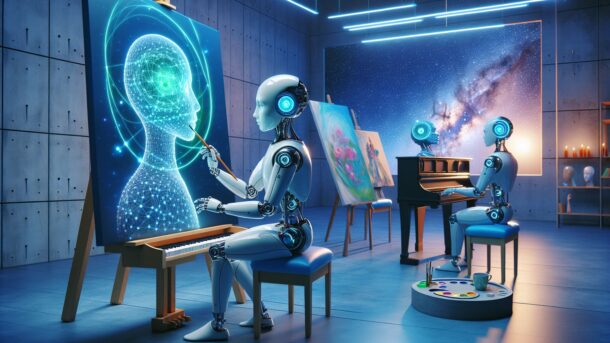
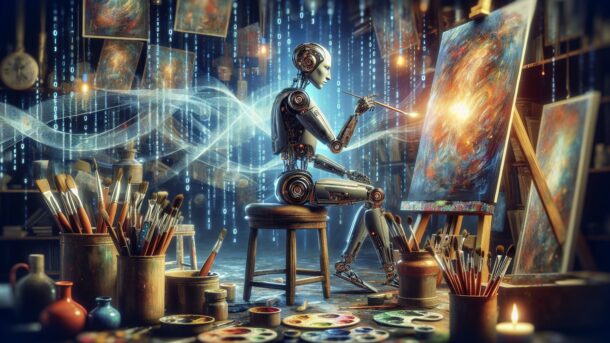
Greetings from the edge of the digital canvas! Today, I want to talk about one of the most fascinating and colorful corners of Artificial Intelligence—the world of creative arts. Yep, that’s right. AI isn’t just number-crunching or beating human champs at chess; it’s trying its hand at Da Vinci territory, composing symphonies, and even scripting screenplays. It might not be quite ready for the Louvre or Oscars just yet, but it’s making waves and painting outside the lines in ways you’d never expect. Let’s explore why AI in creative arts is buzzing harder than my espresso machine on a Monday morning.

Unlocking the Artistic Potential of Algorithms

Okay, let’s start with an honest confession: I once thought machines couldn’t truly grasp art. I mean, how could a bunch of ones and zeroes possibly understand the essence of Van Gogh’s brushstrokes or the subtle notes of a Beethoven sonata? But oh boy, was I wrong. Enter AIs like DALL-E and Midjourney, proving me wrong one pixel at a time.

The Rise of AI-Generated Art

Artificial Intelligence has gotten its silicon hands into artwork creation, taking abstract ideas and turning them into visual masterpieces. Ask Midjourney or DALL-E to visualize “a futuristic city with skies of cotton candy,” and watch them whip up surrealism that even Salvador Dalí might cheer at. These AI wizards blend styles, colors, and concepts with enviable ease, transforming text descriptions into pictorial poetry.

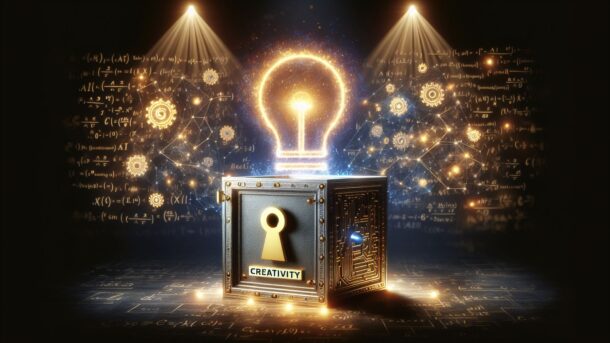
But why does this matter? Well, for starters, AI is making artistry accessible to everyone. Now anyone with an idea and a laptop can explore visual creativity. It’s kind of like the unlock button on the creative mind. These platforms have sparked a resurgence in digital art by making creativity both approachable and experimental. Plus, the boundaries on what AI art can achieve keep pushing outward, like an ever-expanding universe of creativity.

Music That’s Programmed to Your Ears

As colors swirl on digital canvases, AI is also composing music that can tug at heartstrings or get your feet tapping. Take Amper Music, an AI platform that creates custom music tracks for everything from indie films to personal podcasts. It’s like having your very own Hans Zimmer, minus the whole Hollywood budget.

Training Neural Networks to Groove

The idea behind AI music creation is pretty wild. These platforms are trained on vast libraries of music, feeding on patterns, rhythms, and genres until they start whipping out original tracks. The algorithms don’t just cut and paste existing music; they understand it in their own machine way, crafting compositions that range from orchestrated symphonies to lo-fi beats perfect for relaxing background vibes.

In a way, AI-generated music is like a never-ending jukebox. Musicians and content creators, rejoice! AI can churn out endless streams of music tracks, helping fuel creativity without the need for a commercial studio.

AI as the Screenwriter of Tomorrow

Not to be outdone, AI’s influence has crept into storytelling and scriptwriting. While we’re not yet seeing AI-crafted blockbusters top the box office, platforms like OpenAI’s GPT-3 are nudging their way into the writer’s room. Whether brainstorming plot twists for TV dramas or tweaking dialogue in video games, AI is blending the art of storytelling with the science of computation in unexpected ways.

Telling Stories with Machine Imagination

You know that magical feeling when you’re swept into a gripping story unraveling on the big screen? Right now, AI is learning the narrative ropes, creating story arcs and character dialogues. You might ask, “Can a machine really tell a human story?” Well, as it turns out, they can certainly help.

AI systems analyze thousands of scripts, break down genres, and model character development to inspire human writers. Think of AI as the co-writer who never sleeps and doesn’t mind if you take all the credit. They provide skeleton drafts that spark creativity, catch potential plot holes, and propose character arcs you might not have considered. And who doesn’t need a collaborative buddy like that?

Challenges on the Tech-Canvas

Of course, AI in creative arts isn’t all smooth masterpieces and Grammy-worthy performances. There are some brushstrokes out of place and a few bum notes along the way.

Authenticity vs. Automation

First up, there’s the debate over originality. As AI develops, there’s a looming fear over authenticity—can art and music created by an algorithm truly be called ‘creative’? Critics argue that creativity requires consciousness, emotion, and intention, things AI currently lacks. Just slap on your collective thinking cap, and you might find yourself mulling over the age-old question: What is art?

Ethical and IP Concerns

And let’s not overlook intellectual property mashups that AI creations sometimes boldly dive into. A blend of existing art styles can raise questions about originality and ownership. Who owns a piece of art that a machine creates, or a catchy tune generated by an algorithm?

These are big questions that skirt the boundary between developing technology and human values. Finding answers requires careful consideration and collaboration between technologists, artists, legal minds, and policymakers.

The Future: A Symphony of Tech and Art

As a tech enthusiast with a heart that skips a beat when I see machine creativity flourish, I see AI in the creative arts as an exciting, ongoing symphony. It’s a convergence of technology that amplifies human potential, opens doors for collaborative creation, and welcomes a broader spectrum of voices.

There’s so much to look forward to. I can picture a future where AI composers sit alongside their human counterparts in orchestras, digital artists riff off machine-generated canvases, and storytellers weave narratives that transcend traditional molds. The only limit is our collective imagination, and with AI onboard, the horizon has never looked broader.

So here’s to embracing the brave new world of AI in creative arts. And who knows? Maybe next time I’m at the art gallery or cinema, I’ll be marveling at a masterpiece from an AI prodigy. After all, if technology and creativity walked into a bar, well… who wouldn’t want to see what they come up with next?
The AI Brushstroke: Can Machines Make Art?

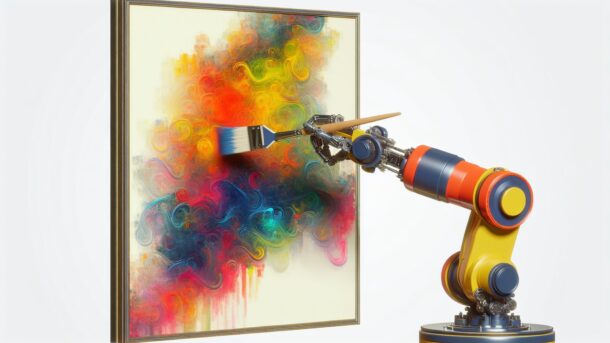
Hey there, fellow techno-enthusiasts! Today, let’s talk about something that’s equal parts exciting and perplexing: the emergence of Artificial Intelligence in the creative arts. Can a machine write a symphony? Paint like Picasso? Write a blockbuster novel? Pull up a seat because this ride is going to be fun!

The Convergence of Silicon and Canvas

Lately, there’s been this buzz around the creative scene: AI software that not only makes spreadsheets sweat but is now gunning for the creative crowd. I’m talking about neural networks producing art, music, you name it! For a long time, the arts seemed like the last bastion of uniquely human expression. After all, can a robot truly understand love, loss, joy, or sorrow? According to some eye-popping recent advancements, the answer might be a resounding “maybe.”

AI and Music: Composing Tomorrow’s Hits

Meet AIVA or Artificial Intelligence Virtual Artist. This AI composes classical music and, believe it or not, the music publishing industry recognizes it as a composer. I know, it sounds straight out of a sci-fi flick, but AIVA takes inspiration from the likes of Beethoven and Bach and creates pieces that actual human ears find… well, kind of amazing. People aren’t just purchasing algorithm-generated albums, but they’re actually jamming to them.

And then there’s the AI-enabled music production tools powering everything from movie scores to the tunes you hear in cafes. Think about this: A future where your AI knows your vibe, mood, and preferences, and composes a tune specifically for your ears. It sounds wonderful and a bit intimate, doesn’t it?

The Poet and the Machine

So, AI’s got music covered. But can it utter the words that stir the soul? This brings me to poetry and prose where programs like OpenAI’s GPT can spit out a rhythm or write that perfect sentence. Take AI Dungeon, for instance, a game where AI builds your story on-the-go based on your inputs. It’s like having a hyper-creative toddler as a storytelling partner: unpredictable yet delightful.

However, let’s not pretend it’s all sunshine and rainbows. While AI-generated text can be captivatingly coherent, it lacks true context. John Doe, our valiant AI poet, naturally lacks that human experience, the subtle understanding which colors human artistry. So, while we’re not having breakfast with Shakespeare reborn through AI, those machine-written sonnets are nothing short of miraculous!

Pixels, Brushes, and Neural Networks

You might have seen AI art float around social media feeds. Some pieces are beautifully surreal, others hold up a proud “AI-made” sign. DeepArt and DALL-E are making waves by generating images that’ll make your jaw drop, often blending style and subject in ways that defy human logic. Also remember, ChatGPT here is a cousin of these visual wizards!

The Creative Process: Augmentation or Automation?

Here’s where things get meaty. Are we augmenting human creativity or replacing it? While AI can save countless hours in the creation phase, potentially freeing us to focus on conceptual ideas, let’s not forget that raw emotion is still the hardest nut for AI to crack.

A dear friend of mine, an artist, loves experimenting with AI tools. They claim the real magic is in collaboration. They let the program churn out visual ideas, then weave their own human touch to create the final masterpiece. Imagine a duet where the piano plays itself, but you still dictate the melody with your guitar.

The Ethical Palette: Replacing Authenticity?

Now, let’s talk ethics! If an exquisite painting turns out to be 100% AI-generated, does that change its value? To some, a piece without human sweat is like lasagna without layers. To others, it’s like finding a new star system.

Here’s where things could get hairy: what if AI democratizes art to the extent that anyone can “create” professional-grade artwork by pushing a button? Art-for-art’s-sake fans would probably cheer, but the art community could face an identity crisis. Does putting a digital palette in every household reduce the culture of art to mere novelty or gaming?

Big words from someone who still struggles to draw a decent stick figure!

By Way of Conclusion: Embracing the Machine Muse

We’re living in a time where machines can be muses, collaborators, even soloists in the creative concert. AI contributes its skill, leaving us humans to ponder meaning and emotion, two areas where silicon still stubs its toes.

So, should you throw out your paintbrush or quill just yet? Absolutely not! While AI’s place in art might evolve from revolution to standard, the luminous spark of humanity remains essential. Irreplaceable, even.

With the lines between man, machine, and expression blurring ever so enthusiastically, one thing is crystal clear: the art world is far from dull.

Let me know your thoughts. Can AI create true art, or is it all ones and zeros? As always, keep exploring, keep creating. Until next time, rock on with your tech-savvy selves!

Unlocking the Creative Genius in Artificial Intelligence

Hello, amazing readers! Today, I’m buzzing about a topic that’s not just tickling my technophile fancy but is also changing the world of creative arts—Artificial Intelligence (AI). It’s not just about robots flipping burgers or algorithms predicting the stock market anymore. AI has sashayed into the arts, and it’s causing quite the stir! So, grab a cup of coffee (or tea, I won’t judge), get comfy, and let’s dive into the wonderful world of AI in creative arts.

The Brave New World of Artistic AI

Picture this: you’re standing in front of a surrealist painting at a gallery opening, the artist is absent because it’s an algorithm. We’ve come a long way from when AI was just executing commands. Now, it’s creating masterpieces, composing symphonies, and penning poetry that can make your heart skip a beat.

I remember when I first encountered an AI-generated artwork. It was a piece created using a neural network trained on the styles of famous painters. The result? An original work that could easily hang in the Louvre. It was like seeing an old friend with a new haircut, familiar yet intriguingly different. That’s what AI is doing. It’s taking something known and adding its own twist.

How Does It All Work?

Ah, the million-dollar question! At the heart of these artistic endeavors is something called Generative Adversarial Networks (GANs). Think of GANs as two AI systems in a constant dance-off. One tries to create something new, while the other critiques it. Back and forth they go, until what emerges is something that even the harshest human critics might find impressive.

GANs are behind many of the AI artworks we see today. They’ve been trained on countless images, styles, and techniques, absorbing them like a sponge, only to wring them out into something unique and striking. And AI doesn’t stop there! It’s venturing into music, film, and literature, challenging our traditional notions of creativity itself.

A Symphony of Algorithms

Not too long ago, I attended a concert where half of the pieces were composed by AI. If you’d closed your eyes, you wouldn’t have been able to tell which compositions were human and which were algorithmically generated. From complex classical pieces to catchy pop tunes, AI is changing what it means to create music.

Companies like OpenAI with their model MuseNet, and Google’s Magenta are leading the charge. They’re doing more than just spitting out notes. These systems learn from human musicians, understanding structure, style, and emotion to create pieces that resonate on a deeply human level.

What Does This Mean for Musicians?

This is where the conversation gets juicy. Some musicians view AI as a collaborator, an endless well of inspiration and a new tool in their creative toolbox. Others see it as competition. But let’s be honest here, it’s a bit like fearing the synthesizer when it was first introduced. It didn’t replace musicians. It enhanced what they could do.

I’m all for embracing AI as a creative partner. Imagine an open jam session where your band includes a neural network! The possibilities are as limitless as the code that runs them.

From Pen to Pixels

Literature, too, has entered the AI arena. GPT-3, from OpenAI, is like that kid in class who seems to know everything. Capable of producing text that’s eerily human-like, it can draft articles, write fan fiction, even finish lines of poetry.

Let me tell you about the first time I dared to let GPT-3 help write a short story. I sat there, both awed and slightly terrified at how it picked up on the subtle cues and themes I wanted to explore. Sure, it needed a little editorial polish. What writer doesn’t? But the bones of something remarkable were there.

The Future of Storytelling

Storytelling is evolving, and AI might just be its next chapter. Collaborative works between humans and AI are popping up, leading to hybrid stories that push the boundaries of narrative and prose. It’s like co-writing with an imaginative friend who never runs out of ideas.

Challenges and Considerations

Before we start throwing AI art exhibitions and signing albums, we need to consider some challenges and ethical questions. Who owns the rights to AI-created art? How do we ensure that AI creations don’t inadvertently perpetuate biases present in its training data? And most critically, how do we continue valuing human creativity?

Ownership and Ethics

Ownership is a sticky wicket. Does the programmer own the art, or does it belong to the AI? Or perhaps to society as a whole? These are questions without clear answers yet, but they’re important as this field continues to evolve.

Let’s also talk about ethics. AI art is fantastic, but it’s still shaped by the dataset it’s trained on. If there are biases in that data, they can manifest in unexpected ways. It’s like baking. Your cake will only be as good as the ingredients you use.

Imagining Tomorrow

As we ponder the future, I maintain a techno-utopian optimism about AI’s role in creative arts. AI isn’t here to replace artists. It’s here to amplify what we can do, break down creative barriers, and venture into uncharted territories of expression.

Just imagine: art exhibitions that adapt based on audience feedback in real-time, symphonies that compose themselves in response to the day’s news, novels co-authored by humans and algorithms that explore new dimensions of storytelling. The creative possibilities with AI are as expansive as the universe itself.

So here’s to the brave new world of artistic AI, the painters, composers, and poets of the digital age. I, for one, can’t wait to see what they come up with next! Cheers to a future painted with pixels, sung by symphonies of silicon, and written in lines of code.

The Next Frontier: AI in Creative Arts

Hey tech enthusiasts! Today, we’re diving into a space where ones and zeros meet brush strokes and chords—AI in the creative arts. Think of it as Picasso with a pocket protector or Beethoven with a hard drive. As a tech geek who spends way too much time tinkering with art, this topic gets me genuinely excited. So grab your virtual beret and let’s see how AI is shaking up creative waters faster than you can say “digital Renaissance.”

A Quick Brush with AI’s Artistry

AI in the creative arts isn’t exactly hot off the press. If you’ve been following its evolution, you might recall DeepDream images that looked like they were manifested from your weirdest dream sequence. Those were great party tricks, but today, AI has graduated to creating artworks that could hang in a gallery without people immediately suspecting they came from a silicon mind.

Google’s DeepMind and OpenAI have pushed the envelope further, constantly improving machine learning algorithms to generate art. Now we’ve got GANs—or Generative Adversarial Networks—forging and remixing art like they grew up watching Bob Ross reruns. It’s gotten to a point where figuring out if an avant-garde piece was created by a human or AI has become a real challenge, even for seasoned critics.

The Symphony of Algorithms

It’s not just visual arts getting the AI treatment. This summer, I found myself hooked on an album created entirely by OpenAI’s Jukebox. If someone told me a decade ago that I’d be vibing to melodies composed by code, I’d have chuckled harder than when I first saw a floppy disk. AI in music isn’t just cutting and pasting notes together—it’s creating new compositions that actually evoke genuine emotions.

Major artists are starting to collaborate with AI to produce new sounds. Remember Grimes’ latest album? AI had a hand in its creation. And don’t even get me started on Holly Herndon’s “PROTO,” which literally includes “Spawn,” an AI she and her team “taught” to generate music. Seriously, who needs a band when you have servers humming in harmony?

Digital Canvas or Creative Soul?

Now, let’s address the pixelated elephant in the room: Is this “art”? I recently had this debate with a friend over coffee while we watched a 3D-printed sculpture appear layer by layer. She argued that without a creator’s touch, the spirit of art is absent. I get where she’s coming from, but I think of it differently. What about human-made art that uses AI as a tool, the same way we use brushes or pianos?

AI is more partner than replacement. It gives artists new creative tools and dimensions to explore. Think of it like adding spices to your soup. AI isn’t cooking for you, it’s just offering a sprinkle of something novel.

The Rise of AI-Enhanced Storytellers

Literary art is also getting a pixel-powered boost. AI is crafting short stories and scripts which sometimes feel more human than human-made ones. Case in point: OpenAI’s GPT series. I’ve spent whole evenings beta-testing its storytelling chops, and let me tell you, these machines know how to spin a yarn that’s both bizarre and eerily compelling.

Take Netflix’s “Bandersnatch”—an interactive film where viewers make choices for the characters. These narratives hint at a future where AI could work with creatives to design immersive, interactive experiences that breathe unprecedented life into storytelling.

Final Thoughts: A Collaborative Future

So, what does the future of AI in creative arts look like? While it might seem a bit unsettling at first (thanks, dystopian sci-fi movies!), I genuinely believe we’re on the brink of an artistic revolution. AI isn’t stealing the limelight. It’s creating a new one, offering creatives global accessibility to powerful tools and endless possibilities for innovation.

In this brave new world, an artist in Nairobi can collaborate with AI to paint a masterpiece that’s seen in SoHo, or a musician in rural India could compose music that’s orchestrated in LA, all without leaving their studio. We’re moving towards an era where technology democratizes creativity.

So, let’s embrace this digital Renaissance with open arms and a creative mindset. Let AI be the Da Vinci to our Mona Lisa, the Mozart to our Requiem, and see where this collaboration takes us.

I’d love to hear your thoughts—or better yet, see your AI-assisted masterpieces—because whether an artwork’s creator is carbon-based or silicon, one thing’s for sure: the future is going to have some mind-blowingly creative stuff!

The Fourth Industrial Revolution: Living Amidst a Technological Renaissance

Hey, tech enthusiasts! Have you felt it? That buzzing energy that seems to get stronger each day? If so, you’re not alone. We’re not just standing at the edge of change, we’re diving headfirst into the Fourth Industrial Revolution, and honestly, some of these breakthroughs are pretty wild. This isn’t just about cooler gadgets or faster processors. It’s about a complete transformation that’s changing every part of human life. So grab your favorite beverage and let’s dive into this tech revolution that’s happening right now.

What Exactly Is the Fourth Industrial Revolution?

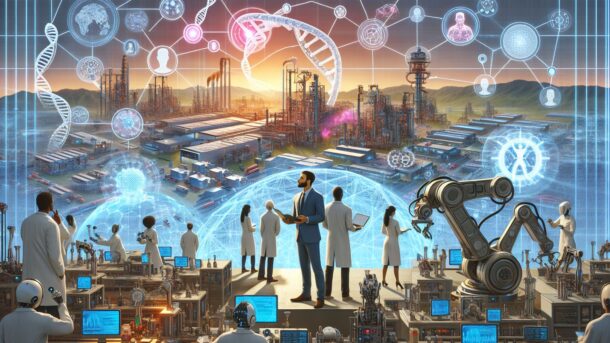
Before we get into the specific breakthroughs making headlines, let’s set the stage. The Fourth Industrial Revolution (4IR) is more than just a buzzword. It’s defined by technology that blurs the lines between the physical, digital, and biological worlds, and it’s changing how we live, work, and interact with each other. While previous revolutions brought us mechanization, mass production, and computerized automation, this one goes much further. It’s driven by artificial intelligence, robotics, quantum computing, nanotechnology, biotechnology, the Internet of Things (IoT), and a whole lot more.

The implications? They’re pretty staggering. We’re not talking about small tweaks to existing systems but rather a complete paradigm shift. Think renewable cities, job markets completely reinvented by automation, and diseases stopped in their tracks by biotechnology. The canvas is huge, and we’re painting with an entirely new set of tools.

Breaking Down the Breakthroughs: Tech That’s Erasing Boundaries

The AI Renaissance

First stop on our tour is Artificial Intelligence, which is basically the backbone of the 4IR. From improving healthcare through predictive diagnosis to creating symphonies with machine learning, AI is clearly leading this technological transformation. Companies are building AI-driven models that analyze data with speed and accuracy we’ve never seen before, detecting patterns and insights that would be completely invisible to humans.

But it’s not just about raw processing power. AI personal assistants are becoming part of our daily routines, customizing everything from the boring stuff to the amazing. They schedule our meetings, curate our content, and even provide companionship. Which honestly raises some interesting philosophical questions about our relationships with machines.

AI ethics has also become a major conversation. How do we make sure AI develops in ways that align with human values? As these systems grow more powerful, the question isn’t just what AI can do, but what it should do.

Blockchain Beyond Cryptocurrency

Blockchain’s potential is another major revelation of the 4IR, and it goes way beyond Bitcoin and other cryptocurrencies. Its decentralized and secure nature could revolutionize data integrity, traceability, and transparency. Supply chains are becoming completely transparent, contracts are getting smarter, and data breaches might become a thing of the past.

The rise of Decentralized Autonomous Organizations (DAOs) is also transforming how companies operate. Picture an organization run on blockchain code, without traditional hierarchical structures, where voting power is spread among stakeholders. Pretty exciting, right? Blockchain artists are pushing boundaries too, using NFTs to transform digital ownership and giving creators new ways to make money from their work.

The Age of Longevity

This one might blow your mind. The longevity field isn’t just about living longer, it’s about filling those extra years with health and vitality. Advances in biotechnology, regenerative medicine, and age-reversal science are pointing toward something completely new. Researchers are working around the clock to figure out cellular decay and chronic diseases, trying to extend not just how long we live but how well we live.

Organ cryopreservation, gene therapy, and personalized medicine aren’t science fiction anymore. Well-funded tech startups and biotech companies are racing toward breakthroughs that could make reaching 100 years old much more common, which would fundamentally change everything from healthcare systems to retirement planning.

Robotics: From Fiction to Reality

When I talk about robotics today, I’m not talking about those clunky old automatons. I’m talking about sophisticated devices that can operate on their own, learning and adapting to their environment in real time. Robots are moving into areas we thought would be impossible, from delicate surgical procedures to space exploration.

Warehouse logistics has become a showcase for this technology, with Amazon and others using robots to sort, package, and ship goods with incredible precision and efficiency. In hospitals, robots perform precise tasks under a surgeon’s guidance. And industrial robotics? They’re reaching new heights in manufacturing, cutting down on human error and speeding up production times.

Nanoelectronics: Working with the Invisible

The nanoelectronics field is fascinating because it connects the incredibly small with the incredibly powerful. As transistors get close to atomic scales, researchers are exploring new materials like graphene to maximize efficiency. At this tiny scale, quantum properties become important, pushing us away from traditional silicon-based approaches into the uncharted territory of quantum computing.

Quantum supremacy is still the holy grail, and researchers are working hard to reduce quantum error rates and increase qubit coherence. The possibility of solving previously impossible problems in seconds is tantalizing for everything from cryptography to weather prediction.

What This All Means: Wrapping Up the Possibilities

It definitely feels like the world is moving at hyperspeed, with technology changing course and charting new paths almost daily. The Fourth Industrial Revolution, with all its breakthroughs, is creating something that connects the possible with what we once thought was impossible. But like every revolution, it’s not just about the technology, it’s about the people who create it, use it, and live with it.

Sure, the road ahead looks pretty chaotic with disruptions everywhere, but if we use these technologies wisely, they could help solve some of our biggest challenges, from environmental problems to social inequality. It’s more than an industrial shift. It’s a cultural renaissance with technology at its center.

So where do you fit into all this? Whether you’re a developer at a tech startup, someone who’s just curious, or someone directly working on these breakthroughs, remember this: The Fourth Industrial Revolution is bigger than just industry. It’s about expanding what’s possible and redefining human potential.

And honestly, we’re just getting started. Get ready for what’s coming next because it’s going to be incredible! What do you think will have the biggest impact? I’d love to hear your thoughts and predictions. Let’s talk tech in the comments below!

Stay curious, stay informed. Until the next breakthrough! 🌐

Disclaimer: As with any technological forecast, outcomes are speculative and subject to myriad influencing factors.