Hey tech enthusiasts! Today, we’re diving into a space where ones and zeros meet brush strokes and chords—AI in the creative arts. Think of it as Picasso with a pocket protector or Beethoven with a hard drive. As a tech geek who spends way too much time tinkering with art, this topic gets me genuinely excited. So grab your virtual beret and let’s see how AI is shaking up creative waters faster than you can say “digital Renaissance.”
A Quick Brush with AI’s Artistry
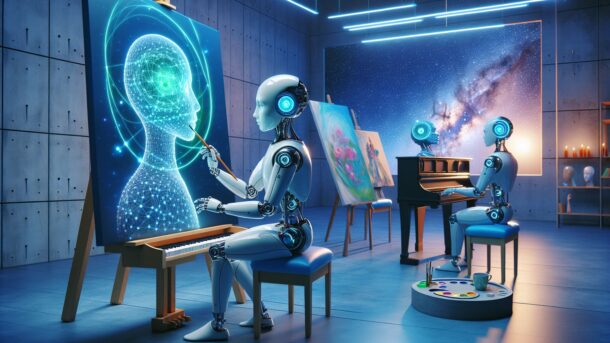
AI in the creative arts isn’t exactly hot off the press. If you’ve been following its evolution, you might recall DeepDream images that looked like they were manifested from your weirdest dream sequence. Those were great party tricks, but today, AI has graduated to creating artworks that could hang in a gallery without people immediately suspecting they came from a silicon mind.
Google’s DeepMind and OpenAI have pushed the envelope further, constantly improving machine learning algorithms to generate art. Now we’ve got GANs—or Generative Adversarial Networks—forging and remixing art like they grew up watching Bob Ross reruns. It’s gotten to a point where figuring out if an avant-garde piece was created by a human or AI has become a real challenge, even for seasoned critics.
The Symphony of Algorithms
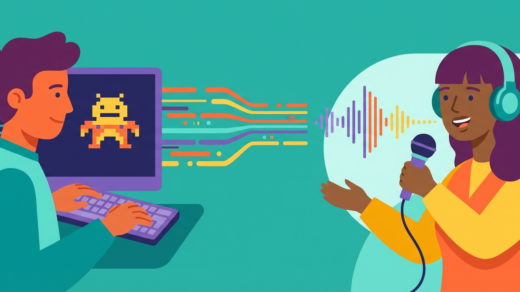
It’s not just visual arts getting the AI treatment. This summer, I found myself hooked on an album created entirely by OpenAI’s Jukebox. If someone told me a decade ago that I’d be vibing to melodies composed by code, I’d have chuckled harder than when I first saw a floppy disk. AI in music isn’t just cutting and pasting notes together—it’s creating new compositions that actually evoke genuine emotions.
Major artists are starting to collaborate with AI to produce new sounds. Remember Grimes’ latest album? AI had a hand in its creation. And don’t even get me started on Holly Herndon’s “PROTO,” which literally includes “Spawn,” an AI she and her team “taught” to generate music. Seriously, who needs a band when you have servers humming in harmony?
Digital Canvas or Creative Soul?
Now, let’s address the pixelated elephant in the room: Is this “art”? I recently had this debate with a friend over coffee while we watched a 3D-printed sculpture appear layer by layer. She argued that without a creator’s touch, the spirit of art is absent. I get where she’s coming from, but I think of it differently. What about human-made art that uses AI as a tool, the same way we use brushes or pianos?
AI is more partner than replacement. It gives artists new creative tools and dimensions to explore. Think of it like adding spices to your soup. AI isn’t cooking for you, it’s just offering a sprinkle of something novel.
The Rise of AI-Enhanced Storytellers
Literary art is also getting a pixel-powered boost. AI is crafting short stories and scripts which sometimes feel more human than human-made ones. Case in point: OpenAI’s GPT series. I’ve spent whole evenings beta-testing its storytelling chops, and let me tell you, these machines know how to spin a yarn that’s both bizarre and eerily compelling.
Take Netflix’s “Bandersnatch”—an interactive film where viewers make choices for the characters. These narratives hint at a future where AI could work with creatives to design immersive, interactive experiences that breathe unprecedented life into storytelling.
Final Thoughts: A Collaborative Future
So, what does the future of AI in creative arts look like? While it might seem a bit unsettling at first (thanks, dystopian sci-fi movies!), I genuinely believe we’re on the brink of an artistic revolution. AI isn’t stealing the limelight. It’s creating a new one, offering creatives global accessibility to powerful tools and endless possibilities for innovation.
In this brave new world, an artist in Nairobi can collaborate with AI to paint a masterpiece that’s seen in SoHo, or a musician in rural India could compose music that’s orchestrated in LA, all without leaving their studio. We’re moving towards an era where technology democratizes creativity.
So, let’s embrace this digital Renaissance with open arms and a creative mindset. Let AI be the Da Vinci to our Mona Lisa, the Mozart to our Requiem, and see where this collaboration takes us.
I’d love to hear your thoughts—or better yet, see your AI-assisted masterpieces—because whether an artwork’s creator is carbon-based or silicon, one thing’s for sure: the future is going to have some mind-blowingly creative stuff!