Valerie Murphy

The Definitive Tier List of Modding Communities That Define Gaming Longevity

S-Tier: The Immortal Engines That Never Stop

At the top of modding ecosystems sits The Elder Scrolls V: Skyrim, a game that has somehow transcended its 2011 release to become digital folklore. Fifteen years later, its modding community is still going strong, with over 100,000 modifications available across various platforms. These aren’t just impressive numbers, they’re proof that certain games achieve a kind of digital immortality through community creativity.

Skyrim earns S-tier status because it hit the perfect storm of modding conditions: accessible creation tools, a fantasy setting that invites endless interpretation, and Bethesda’s early recognition that mods weren’t competition but free content creation. The game’s longevity isn’t about nostalgia or technical merit. It’s about a living ecosystem where amateur creators continuously reshape and reimagine the experience. Critics might argue that Skyrim’s modding success hides fundamental design flaws, but that misses the point entirely. The game became a platform, not just a product.

Minecraft deserves equal S-tier recognition for creating perhaps the most democratized modding environment in gaming history. The CurseForge mod platform hosts thousands of Minecraft modifications that collectively generate billions of downloads annually. Unlike Skyrim’s narrative-focused modifications, Minecraft’s modding scene transforms gameplay mechanics, adds entire technological trees, and creates experiences so different they barely resemble the base game. This isn’t just modification, it’s evolution in real-time.

A-Tier: The Professional Breeding Grounds

Games like Half-Life 2, Warcraft III, and Grand Theft Auto occupy A-tier because they’ve proven that modding communities can work as unofficial training grounds for the game development industry. Counter-Strike began as a Half-Life modification before becoming one of gaming’s most enduring franchises. Defense of the Ancients transformed Warcraft III into the foundation for an entire genre. These aren’t just success stories, they’re proof that modding skills translate directly into professional game development careers.

The A-tier distinction comes from these games’ ability to spawn not just popular modifications, but entirely new gaming paradigms. Warcraft III’s custom map scene didn’t just create DotA. It established the blueprint for MOBAs, tower defense games, and countless other subgenres. Critics might point out that many A-tier games are now decades old, suggesting their modding relevance has diminished. However, their influence on modern game design philosophy and their role in creating today’s development talent pool can’t be ignored.

What separates A-tier from S-tier isn’t quality or historical importance, but sustained contemporary relevance. While these games laid crucial groundwork, they don’t maintain the same explosive, ongoing community activity that defines the S-tier titans.

B-Tier: The Corporate Success Stories

Steam Workshop represents B-tier modding: commercially successful but creatively constrained. Valve’s platform has generated significant revenue through mod monetization, proving that companies can successfully support and profit from modding ecosystems. Games like Team Fortress 2, Cities: Skylines, and Garry’s Mod have thrived within this framework, creating sustainable economies around user-generated content.

The B-tier designation reflects a fundamental tension in modern modding: corporate involvement brings stability and financial incentives but often limits creative freedom. Steam Workshop’s success is undeniable from a business perspective, but it represents a more sanitized, commercialized approach to modification culture. The platform’s content guidelines and revenue-sharing models create professional opportunities while potentially stifling the chaotic creativity that defines the highest tier of modding communities.

Companies increasingly recognize modding as a valuable extension of their products’ lifecycle, leading to official modding tools and supported platforms. This corporate embrace is generally positive for the modding ecosystem, providing resources and legitimacy that grassroots communities often lack. However, it also introduces concerns about creative control and the commercialization of what was historically a purely passion-driven pursuit.

C-Tier: The Legal Minefields

Fan-made remasters and recreations of abandoned intellectual properties occupy the precarious C-tier position. Projects like Black Mesa (Half-Life), OpenMW (Morrowind), or various Pokémon ROM hacks demonstrate incredible technical skill and devotion, but exist in legal grey areas that could end their existence at any moment. These modifications often surpass their source material in technical quality and modern accessibility, yet remain vulnerable to cease-and-desist orders.

The C-tier placement isn’t a judgment of quality. Many of these projects represent the absolute pinnacle of technical achievement in modding. Instead, it reflects their inherent instability and the chilling effect that legal uncertainty has on community development. Some developers and publishers have embraced these projects, while others have aggressively pursued legal action. This inconsistency creates an environment where exceptional work can be destroyed overnight through legal action.

The Nexus Mods platform hosts thousands of modifications that walk this fine line between creative tribute and copyright infringement. The community’s ability to preserve and share these works represents a crucial form of gaming preservation, but the legal framework surrounding these efforts remains frustratingly unclear.

The Future Framework: Where Modding Goes Next

Understanding modding communities through a tier-based framework reveals patterns that will likely define the future of interactive entertainment. S-tier games achieve longevity not through technical superiority alone, but by creating ecosystems where creativity compounds over time. A-tier games prove that modding can work as a pipeline for professional development talent. B-tier commercial success shows that monetization doesn’t necessarily kill community creativity, while C-tier legal challenges highlight the need for clearer frameworks around transformative works.

The games that achieve true longevity through modding share common characteristics: accessible creation tools, flexible underlying systems, and developers who view their products as platforms rather than finished experiences. As the gaming industry continues to evolve, the lessons learned from these tiered modding communities will become increasingly valuable for developers, publishers, and platform holders seeking to create lasting engagement.

Which modding communities do you think deserve different tier placements? Have you seen games rise or fall in modding relevance over time? The conversation around modding longevity is far from settled, and community input often reveals trends that industry analysis might miss.
The Retro Gaming Preservation Playbook: Your Guide to Saving Gaming History

The Crisis Hidden in Plain Sight

Your childhood gaming collection might be worth more than you think, but not for the reasons you expect. While mint-condition cartridges fetch premium prices on auction sites, the real value lies in their digital preservation. Recent research by the Video Game History Foundation reveals a staggering reality: nearly nine out of ten classic video games have vanished from legal availability. These titles exist in a digital limbo, trapped between copyright protection and cultural extinction.

This preservation crisis affects every corner of gaming history. From pioneering arcade classics that defined entire genres to experimental indie releases that pushed creative boundaries, countless games face permanent loss. The fragility of original hardware makes this worse. Capacitors leak, laser assemblies fail, and magnetic media degrades. Without active preservation efforts, these digital artifacts risk becoming inaccessible within decades.

The irony cuts deep. Gaming has grown into a multi-billion dollar industry that celebrates its heritage through remasters, anniversaries, and retro collections. Yet the foundation of this heritage crumbles while legal frameworks struggle to balance intellectual property rights with cultural preservation. If you’re serious about maintaining access to gaming history, you need to understand how broken this system really is.

Legal Pathways Through the Preservation Maze

Navigate preservation legally and you discover a complex web of exceptions, fair use provisions, and institutional privileges. The Library of Congress expanded its game preservation exemptions in 2024, recognizing the unique challenges facing digital media. These updated rules provide clearer guidelines for educational institutions, researchers, and preservation organizations working to maintain gaming heritage.

Institutions like the Internet Archive operate under these expanded protections, hosting the Internet Archive games collection with thousands of playable vintage titles. Their approach uses DMCA safe harbor provisions and educational fair use doctrines. This legal framework allows broader access while respecting copyright holders’ fundamental rights.

The key is understanding intent and methodology. Personal backups of games you own occupy different legal territory than mass distribution of copyrighted content. Educational and research purposes receive stronger protection than commercial exploitation. Documentation and metadata creation often qualify for fair use consideration. These distinctions matter when building your own preservation strategy.

However, legal protection varies significantly by jurisdiction and circumstance. What qualifies as fair use in one context might trigger copyright infringement in another. The smart approach means staying informed about current legal developments while focusing on preservation methods that clearly fall within established guidelines.

The ROM Wars and Corporate Responses

Major publishers maintain aggressive enforcement policies that often seem disconnected from practical preservation needs. Nintendo is the poster child for this approach, pursuing DMCA takedowns against ROM sites hosting games from defunct consoles while simultaneously limiting official re-release availability. Their legal teams target fan projects and homebrew developments that attempt to preserve or extend classic gaming experiences.

This enforcement strategy creates frustration among preservation advocates who argue that companies should embrace community efforts when official support ends. The disconnect becomes particularly apparent when publishers abandon older titles entirely while simultaneously blocking preservation attempts. Some fans interpret this as prioritizing IP control over cultural stewardship.

Corporate silence on preservation policy adds another layer of complexity. Many publishers refuse to articulate clear positions on community preservation efforts, leaving creators and archivists to guess at enforcement boundaries. This uncertainty chills preservation projects and discourages collaborative approaches that could benefit both companies and gaming communities.

Yet some publishers recognize preservation’s value and work constructively with community groups. These partnerships show that commercial interests and historical preservation can coexist. The challenge is scaling these collaborative models across an industry still grappling with digital ownership concepts.

Modern Hardware Solutions and Community Innovation

The hardware preservation scene thrives despite legal uncertainties, driven by innovative companies and passionate communities. Analogue leads the premium market with FPGA-based consoles that provide cycle-accurate reproduction of original hardware behavior. Their approach appeals to purists who demand authentic gaming experiences without compromising on modern conveniences like HDMI output and save states.

MiSTer is the open-source alternative, offering a modular FPGA platform that supports dozens of classic systems through community-developed cores. This grassroots approach democratizes access to high-quality emulation while encouraging collaborative development. The MiSTer ecosystem shows how community innovation can create preservation solutions that rival commercial offerings.

Software emulation continues advancing alongside hardware solutions. Modern emulators achieve remarkable accuracy while adding features impossible on original hardware. Save states, visual filters, and online multiplayer breathe new life into classic games. These tools make preservation accessible to broader audiences while maintaining respect for original creative intent.

The growth of preservation hardware creates opportunities for hands-on involvement. Building a MiSTer setup teaches valuable skills while contributing to preservation efforts. Supporting companies like Analogue signals market demand for authentic retro gaming experiences. These individual choices add up to broader cultural movements that influence industry approaches to preservation.

Building Your Personal Preservation Strategy

Effective personal preservation starts with assessment and prioritization. Catalog your existing collection, noting condition and rarity factors. Focus initial efforts on titles facing immediate threats. Games exclusive to failing platforms or dependent on discontinued online services deserve priority attention. Document everything carefully, as metadata often proves as valuable as the games themselves.

Invest in proper storage and backup systems for physical media. Climate-controlled environments extend cartridge and disc lifespans significantly. Create digital backups where legally permissible, using tools that preserve original data structures and copy protection mechanisms. Multiple backup copies stored in different locations provide insurance against hardware failures and environmental disasters.

Connect with preservation communities to share knowledge and resources. Local gaming groups often organize preservation meetups and skill-sharing sessions. Online forums provide access to technical expertise and rare game discoveries. Contributing to community projects amplifies individual preservation efforts while building valuable relationships with fellow enthusiasts.

Your preservation efforts matter more than you might realize. Every properly maintained cartridge, every carefully documented ROM dump, and every shared piece of gaming history contributes to humanity’s cultural record. The games you save today may provide the only access point for future generations discovering gaming’s rich heritage. Start where you are, use what you have, and do what you can. The preservation community will welcome your contribution, whatever form it takes.

The AI RPG Revolution: Ranking the Players Reshaping Interactive Fiction Forever

The Dawn of AI-Powered Storytelling

The gaming world changed forever in 2019 when AI Dungeon burst onto the scene as the first mainstream AI-driven role-playing game. Built on GPT-2 technology, this platform attracted over 2 million users within months of its launch, proving that players were starving for genuinely limitless interactive fiction. The success wasn’t just about novelty. AI Dungeon showed that machine learning could generate coherent, engaging narratives that responded to player choices in real-time, creating truly personalized adventures that traditional scripted games simply couldn’t match.

The AI RPG Revolution: Ranking the Players Reshaping Interactive Fiction Forever

This explosive growth revealed something important about gaming’s future. Players weren’t content with predetermined story branches or limited dialogue trees anymore. They wanted the freedom to explore any narrative possibility, to test the boundaries of virtual worlds through natural language interaction. AI Dungeon’s millions of users proved that the market for AI-powered interactive fiction wasn’t niche—it was massive and completely underserved.

The platform’s early success also exposed the technical challenges ahead. While GPT-2 could generate surprisingly creative content, it struggled with long-term narrative coherence and character consistency. Players often found themselves in surreal situations where the AI forgot key plot points or character relationships. These limitations weren’t deal-breakers, but they made it clear that more sophisticated AI models and better implementation strategies were desperately needed.

The Contenders: Ranking Today’s AI RPG Platforms

Character.AI currently dominates the broader AI roleplay market with an astounding 20 million daily active users, primarily drawn to its character-focused interactions. While not exclusively a gaming platform, its massive user base proves that AI-driven roleplay has mainstream appeal beyond traditional gaming circles. The platform is excellent at maintaining character personalities and enabling complex social interactions, making it the clear winner for players who prioritize character development over adventure mechanics.

KoboldAI and NovelAI creative writing represent the next tier, appealing to users seeking more control and fewer content restrictions than mainstream platforms offer. KoboldAI’s support for local models gives technically savvy users complete autonomy over their gaming experience, while NovelAI combines sophisticated AI with a creator-friendly approach that respects user privacy and creative freedom. Both platforms sacrifice some user-friendliness for flexibility, making them ideal for dedicated enthusiasts rather than casual players.

AI Dungeon maintains its position as the original pioneer, but faces increased competition from platforms that have learned from its early missteps. While it still has millions of users, content moderation controversies and technical limitations have allowed competitors to gain ground. The platform deserves credit for proving the concept, but its current implementation feels increasingly dated compared to newer alternatives.

The Tabletop Revolution: AI as Dungeon Master

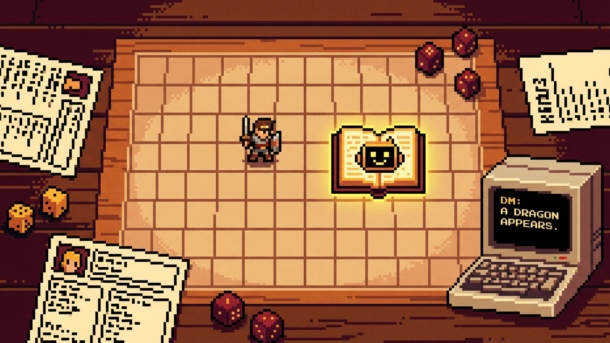
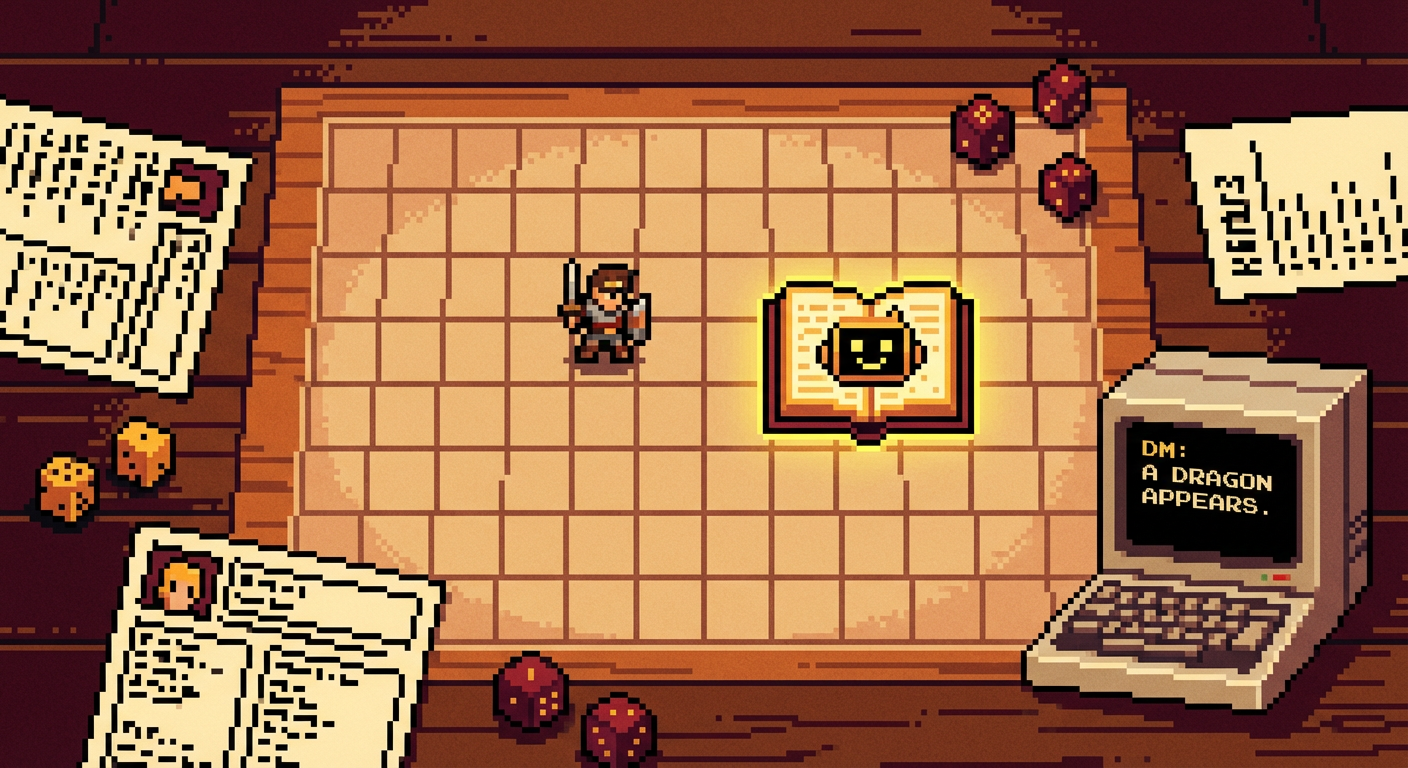
Perhaps the most exciting development in AI gaming isn’t happening on dedicated platforms at all. Tabletop RPG communities have embraced large language models as digital dungeon masters for solo play sessions, fundamentally changing how people experience classic games like Dungeons & Dragons. This trend represents a perfect marriage of traditional gaming structure with AI flexibility, allowing players to enjoy full campaigns without coordinating schedules with human game masters.

These AI dungeon masters are great at generating consistent world-building, managing multiple NPCs, and creating dynamic encounters that respond to player actions. Unlike human DMs, AI never gets tired, never cancels sessions, and can instantly generate new content when players venture off the expected path. The technology has reached a sophistication level where it can maintain campaign continuity across dozens of sessions, tracking character progression and plot developments with remarkable consistency.

The implications extend beyond convenience. AI dungeon masters democratize access to high-quality tabletop experiences for players who lack local gaming groups or struggle with social anxiety. They also work as training tools for aspiring human DMs, providing examples of narrative techniques and encounter design. This application represents AI gaming at its most practical and transformative.

Disrupting Visual Novels and Choose Your Own Adventure

AI-generated branching narratives pose a real threat to traditional visual novel and Choose Your Own Adventure formats. While these established genres rely on carefully crafted, finite story trees, AI systems can generate virtually unlimited narrative branches in response to player input. This capability doesn’t just expand player choice—it fundamentally reimagines what interactive fiction can be.

Traditional visual novels excel at polished presentation and carefully plotted character arcs, but they’re inherently limited by development resources. Even the most ambitious visual novel can only include a few dozen meaningful story branches. AI-driven narratives, by contrast, can explore thousands of potential storylines, creating unique experiences for every player. This isn’t necessarily better, but it’s undeniably different and appealing to players seeking maximum agency.

The disruption runs deeper than just story quantity. AI narratives can incorporate elements from multiple genres simultaneously, shifting between romance, mystery, action, and horror based on player preferences. They can adapt difficulty and complexity in real-time, ensuring that both casual and hardcore players find appropriate challenges. This adaptability makes AI-driven stories more personally relevant than static alternatives.

The Technical Foundation: Why Now?

The current AI RPG boom isn’t accidental. Recent advances in transformer architecture and training methodologies have finally made real-time narrative generation both feasible and compelling. Modern language models understand context, maintain character consistency, and generate coherent long-form content at speeds that enable smooth gameplay experiences. These technical capabilities crossed a critical threshold around 2019, making AI Dungeon’s success both possible and inevitable.

Equally important is how accessible AI technology has become. Open-source models and accessible APIs mean that small development teams can now build sophisticated AI gaming experiences without massive technical infrastructure. This accessibility has sparked innovation across the industry, with new platforms and approaches emerging regularly. The barrier to entry continues dropping, which suggests that AI-driven gaming will become increasingly common and diverse.

The convergence of improved AI capabilities and broader technical accessibility creates perfect conditions for continued growth. As models become more sophisticated and hardware costs decrease, we should expect AI-powered interactive fiction to become a standard gaming category rather than an experimental curiosity.

The AI RPG revolution has moved beyond proof-of-concept into genuine market disruption. Whether you’re drawn to Character.AI’s social focus, NovelAI’s creative freedom, or the emerging world of AI dungeon masters, these platforms represent the future of personalized, limitless storytelling. What’s your experience with AI-driven interactive fiction? Which platforms have delivered the most compelling experiences for your gaming preferences?

How Modding Communities Became Gaming’s Secret Weapon Against Obsolescence

The Quiet Revolution That Saved Our Games

We tell ourselves stories about gaming’s golden ages, but here’s the uncomfortable truth: most of our beloved classics would be gathering digital dust without the tireless work of modding communities. While we nostalgically recall the “good old days” when games shipped complete, we conveniently forget how many of those same titles became repetitive or buggy within months. The real magic happened later, in the hands of passionate fans armed with development tools and unlimited time.

How Modding Communities Became Gaming's Secret Weapon Against Obsolescence
How Modding Communities Became Gaming’s Secret Weapon Against Obsolescence

Take Skyrim, a game that by all reasonable measures should have faded into pleasant memory over a decade ago. Instead, fifteen years after release, it has an active modding scene that has produced over 100,000 modifications. These aren’t simple texture swaps or minor tweaks. Entire provinces have been recreated, combat systems overhauled, and storylines that rival the original campaign have emerged from bedroom developers working for nothing more than community recognition.

This phenomenon extends far beyond single-player RPGs. Minecraft’s modding ecosystem generates billions of downloads each year, transforming what began as a simple block-building game into everything from educational tools to complex industrial simulations. The CurseForge mod platform alone hosts hundreds of thousands of modifications across dozens of games, each representing hours of unpaid labor from developers who simply wanted their favorite games to be better.

When Corporations Learned to Love Chaos

The relationship between game studios and modding communities hasn’t always been smooth. Early modding often involved reverse-engineering protected code, creating tension between creators and their most passionate fans. Studios worried about lost sales, legal liability, and loss of creative control. Modders operated in legal grey areas, never knowing when a cease-and-desist letter might arrive.

But something changed in the last decade. Publishers began recognizing modding communities as unpaid quality assurance teams, content creators, and marketing departments rolled into one. Steam Workshop emerged as a legitimate distribution platform, taking a cut of mod sales while providing creators with professional tools and legal protection. Suddenly, what had been underground passion projects became revenue streams for both modders and the companies whose games they enhanced.

This transition wasn’t entirely altruistic. Publishers discovered that games with active modding scenes maintained higher player counts, generated more word-of-mouth marketing, and could be monetized long after traditional DLC cycles ended. Bethesda’s Creation Club, Valve’s Workshop, and similar initiatives represent a new model where community creativity becomes corporate asset. The question remains whether this partnership enhances or diminishes the anarchic spirit that made modding special in the first place.

The Legal Minefield of Fan Devotion

Nowhere is the tension between corporate control and fan passion more obvious than in the realm of fan-made remasters. Dedicated communities have spent years recreating abandoned games in modern engines, only to face legal action from companies that had shown no interest in those properties for decades. These projects exist in perpetual legal limbo, celebrated by players but viewed with suspicion by rights holders.

The most successful fan remasters walk a careful line, recreating gameplay mechanics and level design while requiring players to own the original games. This approach acknowledges intellectual property concerns while preserving gaming history that might otherwise be lost to obsolete hardware and discontinued digital storefronts. Sites like Nexus Mods have become important archives, hosting modifications that keep decades-old games playable on modern systems.

Yet the legal uncertainties remain. Fan projects can be shut down at any moment, regardless of their quality or the time invested. This creates a strange dynamic where the most passionate fans of a property live in constant fear of legal action from the very companies they’re trying to support through their unpaid labor.

From Bedroom to Boardroom

Perhaps the most tangible benefit of modding communities lies in their role as unofficial training grounds for professional game development. The skills required to create successful mods, programming, 3D modeling, level design, project management, translate directly to industry careers. Many prominent developers got their start in modding scenes, learning through trial and error what formal education couldn’t teach.

Counter-Strike began as a Half-Life mod. Team Fortress started in the Quake community. DayZ emerged from ARMA modifications. These success stories represent more than clever marketing. They show how modding communities work as research and development arms for an entire industry. Publishers increasingly scout modding scenes for talent, offering jobs to creators who demonstrate both technical skill and understanding of player psychology.

This pipeline benefits everyone involved. Modders gain professional experience and portfolio pieces. Publishers identify pre-tested talent. Players receive games developed by people who understand their communities from the inside. The traditional barriers between amateur and professional development continue to erode, creating opportunities that didn’t exist when game development required expensive development kits and publisher relationships.

The Price of Permanence

Modding communities have fundamentally altered our relationship with gaming longevity. Games are no longer static products with defined lifespans. They’re platforms for ongoing creativity. This shift brings benefits and complications in equal measure. While beloved titles can theoretically live forever through community support, they also become dependent on volunteer labor from increasingly smaller groups of dedicated fans.

The mathematics of community-driven longevity are sobering. As modding scenes age, fewer new contributors join while original members move on to new projects or professional careers. Games that once supported thousands of active modders may eventually rely on handfuls of maintainers to keep essential compatibility patches updated. When these key figures step away, entire ecosystems can collapse overnight.

This fragility raises questions about preservation and sustainability that the gaming industry has yet to fully address. Should publishers be required to release development tools when they abandon properties? How can we ensure that community-created content remains accessible as platforms evolve? The modding communities that have given our favorite games extended life deserve more than our gratitude. They need institutional support that recognizes their cultural importance.

What’s your experience with game modifications? Have you witnessed a modding community breathe new life into an aging favorite, or watched one slowly fade away? Share your stories in the comments and let’s celebrate the unsung heroes who keep our digital worlds alive.

Retro gaming preservation and the ROM debate: Design criticism

Here is the thing I keep coming back to on this. The topic of retro gaming preservation and the ROM debate rewards more careful attention than the typical coverage provides, and the reason is not complicated once you know where to look.

What I find most interesting, and I think you will too, is the Internet Archive hosting thousands of playable vintage games under DMCA exception. The appreciative read of the situation is also the more accurate one once you examine what the evidence actually shows.

The Criticism: Setting the Terms

The Video Game History Foundation found 87 percent of classic games are out of print or inaccessible. This isn’t just a data point, it’s the core problem that makes everything else in retro gaming preservation matter. Context like this doesn’t age quickly. The conditions that produced it have been building for years, and this convergence makes the current moment different from previous moments that looked similar from a distance.

The Internet Archive hosts thousands of playable vintage games under DMCA exception. Nintendo sends DMCA takedowns targeting decades-old ROMs and fan projects. When you look at both together, a pattern emerges that the Video Game History Foundation has been covering from the inside: the conditions are more durable than they first appear, and the implications extend further than the immediate headline suggests.

To understand why this matters, it helps to look at what was true three years ago versus what is true now. The change isn’t simply quantitative, it’s qualitative. The participants, the infrastructure, and the incentive structures have all shifted in ways that compound rather than cancel out. That compounding is the most important element to track.

What makes this moment worth examining carefully is not the novelty but the confirmation. The underlying dynamics have been visible for some time. What’s new is that they’ve reached a threshold where ignoring them requires active effort rather than simple inattention. That threshold crossing is the event, not the underlying movement that produced it.

And the emulation hardware market is growing with Analogue and MiSTer FPGA devices as part of that same picture. These elements don’t exist in separate silos. They’re reinforcing conditions in the same structural shift.

The Hidden Depth: The Analysis

The emulation hardware market growing with Analogue and MiSTer FPGA devices is where the analysis gets more specific. The surface reading is accessible and not wrong, but it misses the mechanism. The mechanism is where the practical insight lives. What I find most interesting is this: game publishers are increasingly silent on preservation while pursuing IP aggressively. Understanding it changes what you do with the information.

Consider what game publishers increasingly silent on preservation while pursuing IP aggressively represents in context. It’s not a correlation that happened to appear randomly. It’s a downstream consequence of structural factors that have been compounding. Previous readings of similar situations failed because they treated the symptom as the cause. The structural account is less satisfying as a headline but more useful as an analytical tool.

The comparison to prior cycles is instructive precisely because of where it breaks down. Similar conditions resolved differently in previous iterations because the substrate was different. What the Library of Congress exemptions for game preservation renewed and expanded in 2024 represents is a substrate change. The kind that alters how flexible the system is rather than just its current value. Recognizing that distinction separates analysis from pattern-matching.

The skeptical counterargument deserves honest engagement: prior moments with similar surface characteristics didn’t produce the outcomes that seemed logical at the time. That history is real. What’s different now is the Library of Congress exemptions for game preservation renewed and expanded in 2024, which isn’t a minor variable. It’s the infrastructure condition that previous cycles lacked. Infrastructure changes tend to stick around in ways that sentiment-driven changes don’t. Internet Archive games is one source tracking this with the rigor it requires.

There’s also a distributional question that often goes unaddressed in coverage of retro gaming preservation and the ROM debate: who captures the value created by these shifts, and who absorbs the disruption costs? The aggregate picture can be positive while the distribution is uneven in ways that matter enormously to specific participants. Keeping that distributional lens in view is part of reading the situation clearly rather than simply optimistically.

Implications: What This Means If You Care About Game design analysis

The implications of retro gaming preservation and the ROM debate extend beyond the immediate context. The Video Game History Foundation found 87 percent of classic games are out of print or inaccessible. Combined with the structural conditions described above, this creates a situation where adjacent fields, decisions, and communities are affected in ways that aren’t always visible from inside the primary story. The second-order effects are frequently more important than the first-order ones, and they’re where careful attention pays the highest returns.

The frame that matters here, and this is where this perspective departs from mainstream coverage, is that Nintendo DMCA takedowns targeting decades-old ROMs and fan projects is a leading indicator rather than a lagging one. The people positioned to respond to what this signals, rather than to what it confirms, are the ones who will be less surprised by what follows.

The practical response depends heavily on your position relative to the dynamics at play. For those closest to the core of retro gaming preservation and the ROM debate, the implications are immediate and operational. For those at greater distance, the implications are strategic. A matter of understanding which adjacent pressures are building and which assumed stabilities are more fragile than they appear.

The practical question isn’t whether to engage with these dynamics but how. The answer depends on context: what role you occupy relative to retro gaming preservation and the ROM debate and what your actual decision horizon is. But the first step is the same regardless: accurate understanding of what’s actually happening rather than what the most available narrative says is happening.

A few concrete observations are worth separating out from the broader analysis. First: the Internet Archive hosting thousands of playable vintage games under DMCA exception isn’t a temporary condition. It’s a new baseline. Second: game publishers increasingly silent on preservation while pursuing IP aggressively suggests that the adjustment period isn’t over. Third, and most important: the organizations and individuals who are treating the current moment as a new steady state rather than a transition are making a categorization error that will be costly to unwind later.

The Case Against: What the Critics Get Right

Intellectual honesty requires acknowledging the strongest counterarguments, not just the weakest ones. The case against the optimistic reading of retro gaming preservation and the ROM debate isn’t trivial. There are structural vulnerabilities in the current picture that need direct engagement rather than dismissal.

The most serious objection is the one about sustainability. Nintendo DMCA takedowns targeting decades-old ROMs and fan projects can be read not as a foundation but as a ceiling. A point beyond which growth becomes self-limiting because of the very dynamics that produced it. If the current state has already incorporated most of the available supply of early-adopting participants, the remaining growth curve may be structurally shallower than the recent trajectory implies.

There’s also the policy and regulatory dimension. The Video Game History Foundation found 87 percent of classic games are out of print or inaccessible describes a condition in a relatively permissive environment. Regulatory responses to the scale implied by these numbers aren’t inevitable, but they aren’t implausible either. The organizations that are planning as though the current regulatory environment is permanent are making an assumption that the history of fast-growing sectors doesn’t support.

The rebuttal to these concerns isn’t that they’re wrong. It’s that they’re already partially priced into the current state of the field. The Library of Congress exemptions for game preservation renewed and expanded in 2024 reflects an environment where participants are already adapting to constraints rather than operating in an unconstrained space. The adjustment capacity of the ecosystem is higher than a purely top-down view of the risks suggests.

Looking Forward

The trajectory here is clearer than the pace. Making predictions about when specific thresholds will be crossed is genuinely difficult, and anyone claiming precision about timelines should be treated with skepticism. But the direction toward the Video Game History Foundation findings and continued development of the conditions described above is supported by the evidence in a way that isn’t contingent on a single variable going right.

The Library of Congress exemptions for game preservation renewed and expanded in 2024 is the variable to watch as the leading indicator. Historical patterns suggest it moves first, with broader metrics following with some lag. This doesn’t make the outcome certain, but it makes it legible. And legibility is the precondition for good decisions.

Three questions are worth holding as the story develops. First: are the structural conditions that enabled the current state durable, or are they cyclical? Second: who is positioned to benefit from the next phase, and does that differ materially from who benefited in the current phase? Third: what would a clean falsification of the optimistic thesis look like, and is there any evidence of that signal emerging? These questions don’t need answers today, but having asked them changes what you notice in the months ahead.

That’s my read. I want to hear yours. The current moment in retro gaming preservation and the ROM debate is one where the people who have built an accurate model of the underlying dynamics are better positioned than the people who are relying on the surface story. Building that model isn’t a quick task, but it is a tractable one. This analysis is intended as one input into it.

What’s the design choice in this game that you don’t think gets enough credit?

Retro gaming preservation and the ROM debate: Design criticism

Here is the thing I keep coming back to on this. The topic of retro gaming preservation and the ROM debate rewards more careful attention than the typical coverage provides, and the reason is not complicated once you know where to look.

What I find most interesting, and I think you will too, when viewed through design criticism, is Internet Archive hosting thousands of playable vintage games under DMCA exception. The appreciative read of the situation is also the more accurate one once you examine what the evidence actually shows.

The Criticism: Setting the Terms

Video Game History Foundation found 87 percent of classic games out of print or inaccessible. This isn’t just a data point, it’s the structural condition that makes everything else in this analysis make sense. Context like this doesn’t age quickly. The conditions that produced it have been building for years, and the convergence is what makes the current moment different from previous moments that looked similar from a distance.

Internet Archive hosting thousands of playable vintage games under DMCA exception and Nintendo DMCA takedowns targeting decades-old ROMs and fan projects. When you look at both together, a pattern emerges that Video Game History Foundation has been covering from the inside: the conditions are more durable than they first appear, and the implications extend further than the immediate headline suggests.

To understand why this matters, it helps to look at what was true three years ago versus what is true now. The delta is not simply quantitative, it’s qualitative. The participants, the infrastructure, and the incentive structures have all shifted in ways that compound rather than cancel out. That compounding is the most important element to track.

What makes this moment worth examining carefully is not the novelty but the confirmation. The underlying dynamics have been visible for some time. What’s new is that they’ve reached a threshold where ignoring them requires active effort rather than simple inattention. That threshold crossing is the event, not the underlying movement that produced it.

And the emulation hardware market growing with Analogue and MiSTer FPGA devices is part of that same picture. These elements don’t exist in separate silos, they’re reinforcing conditions in the same structural shift.

The Hidden Depth: The Analysis

The emulation hardware market growing with Analogue and MiSTer FPGA devices is where the analysis gets more specific. The surface reading is accessible and not wrong, but it misses the mechanism, and the mechanism is where the practical insight lives. What I find most interesting, and I think you will too, is the mechanism: game publishers increasingly silent on preservation while pursuing IP aggressively. Understanding it changes what you do with the information.

Consider what game publishers increasingly silent on preservation while pursuing IP aggressively represents in context. It’s not a correlation that happened to appear, it’s a downstream consequence of structural factors that have been compounding. Previous readings of similar situations failed because they treated the symptom as the cause. The structural account is less satisfying as a headline but more useful as an analytical tool.

The comparison to prior cycles is instructive precisely because of where it breaks down. Superficially similar conditions resolved differently in previous iterations because the substrate was different. What Library of Congress exemptions for game preservation renewed and expanded in 2024 represents is a substrate change, the kind that alters the elasticity of the system rather than just its current value. Recognizing that distinction separates analysis from pattern-matching.

The skeptical counterargument deserves honest engagement: prior moments with similar surface characteristics did not produce the outcomes that seemed logical at the time. That history is real. What’s different now is Library of Congress exemptions for game preservation renewed and expanded in 2024, which is not a minor variable, it’s the infrastructure condition that previous cycles lacked. Infrastructure changes tend to be persistent in ways that sentiment-driven changes are not. Internet Archive games is one source tracking this dimension with the rigor it requires.

There’s also a distributional question that often goes unaddressed in coverage of retro gaming preservation and the ROM debate: who captures the value created by these shifts, and who absorbs the disruption costs? The aggregate picture can be positive while the distribution is uneven in ways that matter enormously to specific participants. Keeping that distributional lens in view is part of reading the situation clearly rather than simply optimistically.

Implications: What This Means If You Care About Game design analysis

The implications of retro gaming preservation and the ROM debate extend beyond the immediate context. Video Game History Foundation found 87 percent of classic games out of print or inaccessible combined with the structural conditions described above creates a situation where adjacent fields, decisions, and communities are affected in ways that aren’t always visible from inside the primary story. The second-order effects are frequently more important than the first-order ones, and they’re where careful attention pays the highest returns.

The frame that matters here, and this is where this perspective departs from the mainstream coverage, is that Nintendo DMCA takedowns targeting decades-old ROMs and fan projects is a leading indicator rather than a lagging one. The people positioned to respond to what this signals, rather than to what it confirms, are the ones who will be less surprised by what follows.

The practical response depends heavily on your position relative to the dynamics at play. For those closest to the core of retro gaming preservation and the ROM debate, the implications are immediate and operational. For those at greater distance, the implications are strategic, a matter of understanding which adjacent pressures are building and which assumed stabilities are more fragile than they appear.

The practical question is not whether to engage with these dynamics but how. The answer depends on context, on what role you occupy relative to retro gaming preservation and the ROM debate and what your actual decision horizon is. But the first step is the same regardless: accurate understanding of what’s actually happening rather than what the most available narrative says is happening.

A few concrete observations are worth separating out from the broader analysis. First: Internet Archive hosting thousands of playable vintage games under DMCA exception is not a temporary condition, it’s a new baseline. Second: game publishers increasingly silent on preservation while pursuing IP aggressively suggests that the adjustment period is not over. Third, and most important: the organizations and individuals who are treating the current moment as a new steady state rather than a transition are making a categorization error that will be costly to unwind later.

The Case Against: What the Critics Get Right

Intellectual honesty requires acknowledging the strongest counterarguments, not just the weakest ones. The case against the optimistic reading of retro gaming preservation and the ROM debate is not trivial. There are structural vulnerabilities in the current picture that deserve direct engagement rather than dismissal.

The most serious objection is the one about sustainability. Nintendo DMCA takedowns targeting decades-old ROMs and fan projects can be read not as a foundation but as a ceiling, a point beyond which growth becomes self-limiting because of the very dynamics that produced it. If the current state has already incorporated most of the available supply of early-adopting participants, the remaining growth curve may be structurally shallower than the recent trajectory implies.

There’s also the policy and regulatory dimension. Video Game History Foundation found 87 percent of classic games out of print or inaccessible describes a condition in a relatively permissive environment. Regulatory responses to the scale implied by these numbers aren’t inevitable, but they aren’t implausible either. The organizations that are planning as though the current regulatory environment is permanent are making an assumption that the history of fast-growing sectors doesn’t support.

The rebuttal to these concerns is not that they’re wrong, it’s that they’re already partially priced into the current state of the field. Library of Congress exemptions for game preservation renewed and expanded in 2024 reflects an environment where participants are already adapting to constraints rather than operating in an unconstrained space. The adjustment capacity of the ecosystem is higher than a purely top-down view of the risks suggests.

Looking Forward

The trajectory here is clearer than the pace. Making predictions about when specific thresholds will be crossed is genuinely difficult, and anyone claiming precision about timelines should be treated with skepticism. But the direction, toward Video Game History Foundation found 87 percent of classic games out of print and continued development of the conditions described above, is supported by the evidence in a way that doesn’t depend on a single variable going right.

Library of Congress exemptions for game preservation renewed and expanded in 2024 is the variable to watch as the leading indicator. Historical patterns suggest it moves first, with broader metrics following with some lag. This doesn’t make the outcome certain, but it makes it legible, and legibility is the precondition for good decisions.

Three questions are worth holding as the story develops. First: are the structural conditions that enabled the current state durable, or are they cyclical? Second: who is positioned to benefit from the next phase, and does that differ materially from who benefited in the current phase? Third: what would a clean falsification of the optimistic thesis look like, and is there any evidence of that signal emerging? These questions don’t need answers today, but having asked them changes what you notice in the months ahead.

That’s my read. I want to hear yours. The current moment in retro gaming preservation and the ROM debate is one where the people who have built an accurate model of the underlying dynamics are better positioned than the people who are relying on the surface story. Building that model is not a quick task, but it’s a tractable one, and this analysis is intended as one input into it.

What’s the design choice in this game that you don’t think gets enough credit?