Remember When Games Just Had to Be Good?
I’ve been thinking a lot about GTA: Vice City lately. You know that feeling when “Billie Jean” kicks in while you’re cruising down Ocean Drive at sunset? Pure magic, right? The whole game cost around $9 million to make, and somehow it captured something that felt infinite. Fast forward to 2026, and Take-Two Interactive just dropped the news that they’re spending two billion dollars just to tell people GTA VI exists. Not to make it. Just to market it.
Let that sink in for a moment. According to Take-Two Interactive investor relations, this marketing budget is the largest promotional investment in entertainment history. That’s more than some countries spend on their entire annual defense budgets. It’s enough money to fund hundreds of indie studios for years. But here we are, watching the industry chase numbers that would make Hollywood blush.
I’m not saying GTA VI won’t be incredible. Early glimpses suggest Rockstar has made something genuinely impressive. But when the conversation shifts from “will this be fun” to “will this justify a marketing spend larger than NASA’s annual budget,” something fundamental has shifted in gaming culture. We’re not just buying games anymore. We’re investing in entertainment ecosystems that demand our wallets, our hard drives, and apparently our souls.
The Pre-Order Phenomenon That Broke Records
Within 72 hours of GTA VI’s announcement, 23.4 million people had already committed their money. That’s $1.6 billion in guaranteed revenue before anyone has even played the thing. Those numbers are staggering, but they also tell a story about how disconnected we’ve become from the actual experience of discovering games organically.
I remember when pre-ordering meant walking into GameStop and putting five bucks down on something that looked cool in a magazine. There was risk involved, sure, but it was manageable risk. Now we’ve got pricing tiers that stretch from $90 to nearly $300, with promises of “10 years of guaranteed content updates” that sound more like subscription agreements than game purchases. The Premium Edition asks players to mortgage a decade of their gaming future on a single title.
The psychology here fascinates me. We’re so hungry for genuine gaming experiences that we’ll throw money at the promise of one, even when that promise comes wrapped in corporate speak about “ongoing content ecosystems” and “persistent engagement frameworks.” It’s like we’ve forgotten that the best games were often the ones we stumbled across by accident, not the ones that demanded our attention through billion-dollar marketing campaigns.
When 180GB Isn’t Enough
Here’s where things get really interesting from a technical perspective. GTA VI clocks in at 180 gigabytes, but that’s just the starting point. For the first time in AAA gaming history, a major release is abandoning the concept of local-only storage entirely. Mandatory cloud streaming components mean parts of the game simply won’t exist on your hardware.
On one hand, this makes sense. Modern open-world games are incredibly complex, and cloud technology allows for experiences that would be impossible on local hardware alone. Dynamic weather systems, real-time economic simulations, AI-driven narratives that adapt to millions of players at once. These are genuinely exciting technological possibilities.
But I can’t help thinking about my friend who still plays San Andreas on his modded Xbox because his internet is spotty. Or the countless players in regions where reliable broadband isn’t guaranteed. We’re trading ownership for access, permanence for innovation. Maybe that’s progress, but it’s also the end of gaming as a medium you can truly own. When the servers shut down in 15 years, what happens to those billions of dollars in pre-orders?
The Studio Expansion That Nobody Talks About
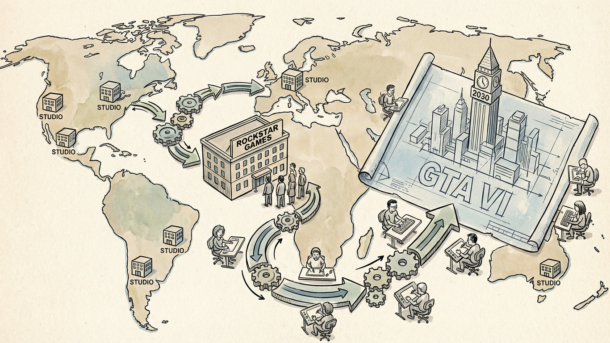
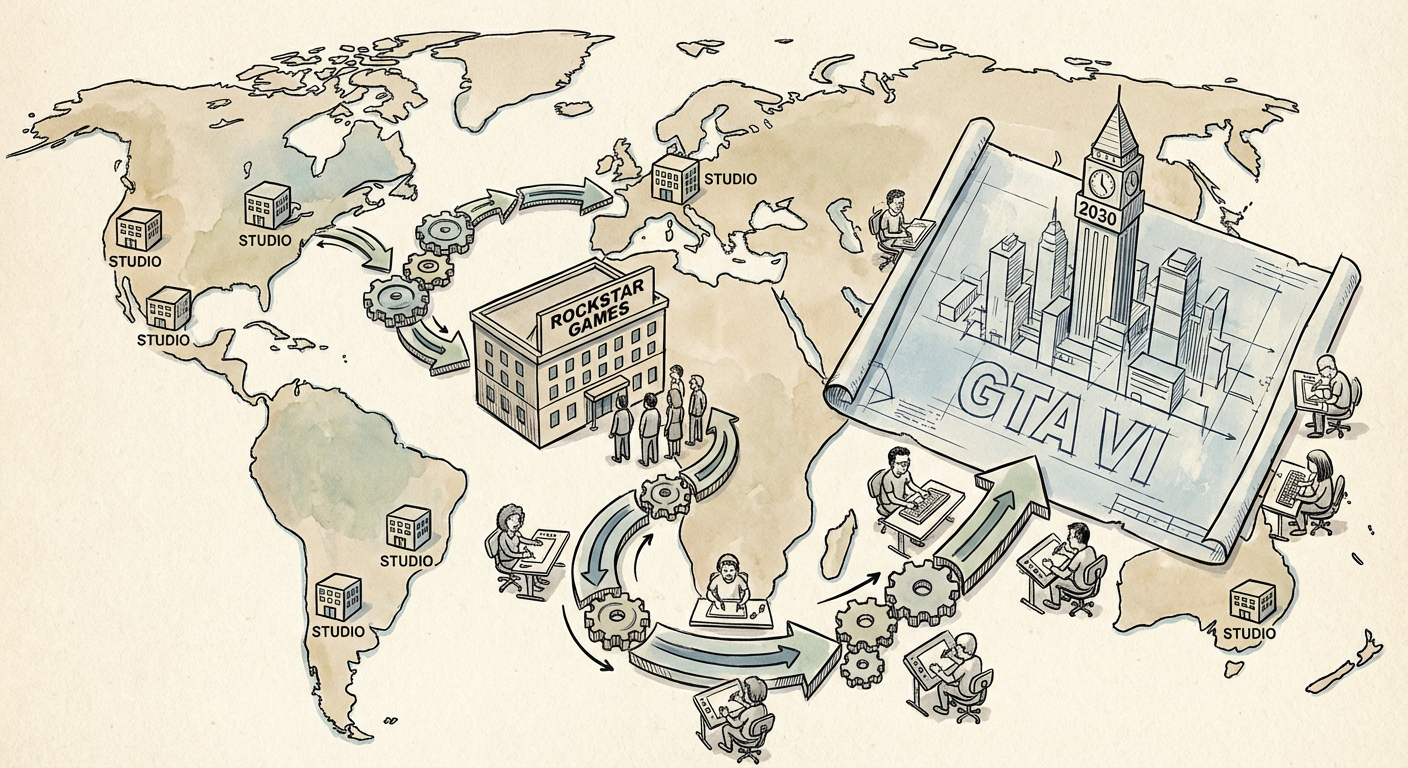
Behind all these numbers is perhaps the most telling detail: Rockstar hired 340 additional developers across eight studios specifically for GTA VI’s post-launch content development through 2030. According to the Rockstar Games development blog, this is the largest workforce expansion in the company’s history.
This isn’t just about making a game anymore. It’s about building a platform that will consume development resources for the better part of a decade. These 340 people aren’t working on GTA VII or the next Red Dead. They’re committed to feeding the content machine that GTA VI will become. That’s exciting for players who want their favorite game to evolve continuously, but it’s also a massive bet that a single game can sustain interest for nearly half a decade.
I think about smaller studios like Supergiant Games, who created Hades with a team of about 20 people. That game delivered more genuine innovation and emotional impact than most AAA releases from the past five years. Now we’re in an era where 340 developers is considered a reasonable allocation for post-launch support alone. The scale is impressive, but I worry we’re optimizing for engagement metrics rather than the kind of breakthrough experiences that make people fall in love with gaming in the first place.
What We Gain and What We Lose
Don’t get me wrong. I’m genuinely excited to see what Rockstar does with this level of investment and ambition. The technical achievements will probably be stunning. The world they’re building will likely set new standards for interactive entertainment. And honestly, after years of half-finished releases and broken promises, there’s something refreshing about a company putting their money where their mouth is.
But I can’t shake the feeling that we’re watching the end of an era. When marketing budgets hit two billion dollars, when pre-orders generate more revenue than most games ever see, when storage requirements demand cloud integration, we’re not just talking about bigger games. We’re talking about a fundamentally different relationship between players and the medium we love.
The games that shaped me weren’t the ones with the biggest budgets or the most aggressive marketing campaigns. They were the weird experimental titles, the unexpected sequels, the passion projects that somehow found their audience through word of mouth and genuine enthusiasm. I worry that in our rush toward these massive, all-consuming entertainment platforms, we’re leaving less room for those happy accidents that make gaming magical.
What do you think? Are we witnessing the evolution of gaming into something better, or are we trading the soul of the medium for spectacle? I’d love to hear your thoughts on where this all leads, especially if you’ve got stories about games that surprised you in ways no marketing budget could have predicted.