The Dawn of AI-Powered Storytelling
The gaming world changed forever in 2019 when AI Dungeon burst onto the scene as the first mainstream AI-driven role-playing game. Built on GPT-2 technology, this platform attracted over 2 million users within months of its launch, proving that players were starving for genuinely limitless interactive fiction. The success wasn’t just about novelty. AI Dungeon showed that machine learning could generate coherent, engaging narratives that responded to player choices in real-time, creating truly personalized adventures that traditional scripted games simply couldn’t match.
This explosive growth revealed something important about gaming’s future. Players weren’t content with predetermined story branches or limited dialogue trees anymore. They wanted the freedom to explore any narrative possibility, to test the boundaries of virtual worlds through natural language interaction. AI Dungeon’s millions of users proved that the market for AI-powered interactive fiction wasn’t niche—it was massive and completely underserved.
The platform’s early success also exposed the technical challenges ahead. While GPT-2 could generate surprisingly creative content, it struggled with long-term narrative coherence and character consistency. Players often found themselves in surreal situations where the AI forgot key plot points or character relationships. These limitations weren’t deal-breakers, but they made it clear that more sophisticated AI models and better implementation strategies were desperately needed.
The Contenders: Ranking Today’s AI RPG Platforms
Character.AI currently dominates the broader AI roleplay market with an astounding 20 million daily active users, primarily drawn to its character-focused interactions. While not exclusively a gaming platform, its massive user base proves that AI-driven roleplay has mainstream appeal beyond traditional gaming circles. The platform is excellent at maintaining character personalities and enabling complex social interactions, making it the clear winner for players who prioritize character development over adventure mechanics.
KoboldAI and NovelAI creative writing represent the next tier, appealing to users seeking more control and fewer content restrictions than mainstream platforms offer. KoboldAI’s support for local models gives technically savvy users complete autonomy over their gaming experience, while NovelAI combines sophisticated AI with a creator-friendly approach that respects user privacy and creative freedom. Both platforms sacrifice some user-friendliness for flexibility, making them ideal for dedicated enthusiasts rather than casual players.
AI Dungeon maintains its position as the original pioneer, but faces increased competition from platforms that have learned from its early missteps. While it still has millions of users, content moderation controversies and technical limitations have allowed competitors to gain ground. The platform deserves credit for proving the concept, but its current implementation feels increasingly dated compared to newer alternatives.
The Tabletop Revolution: AI as Dungeon Master
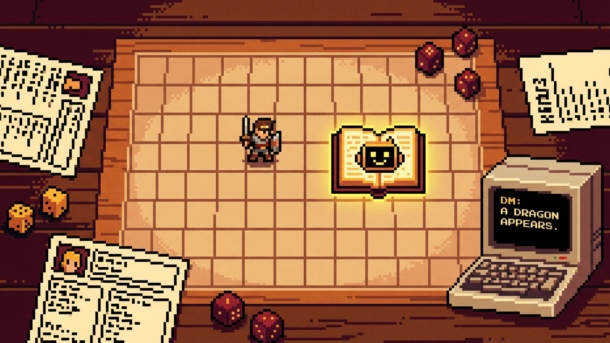
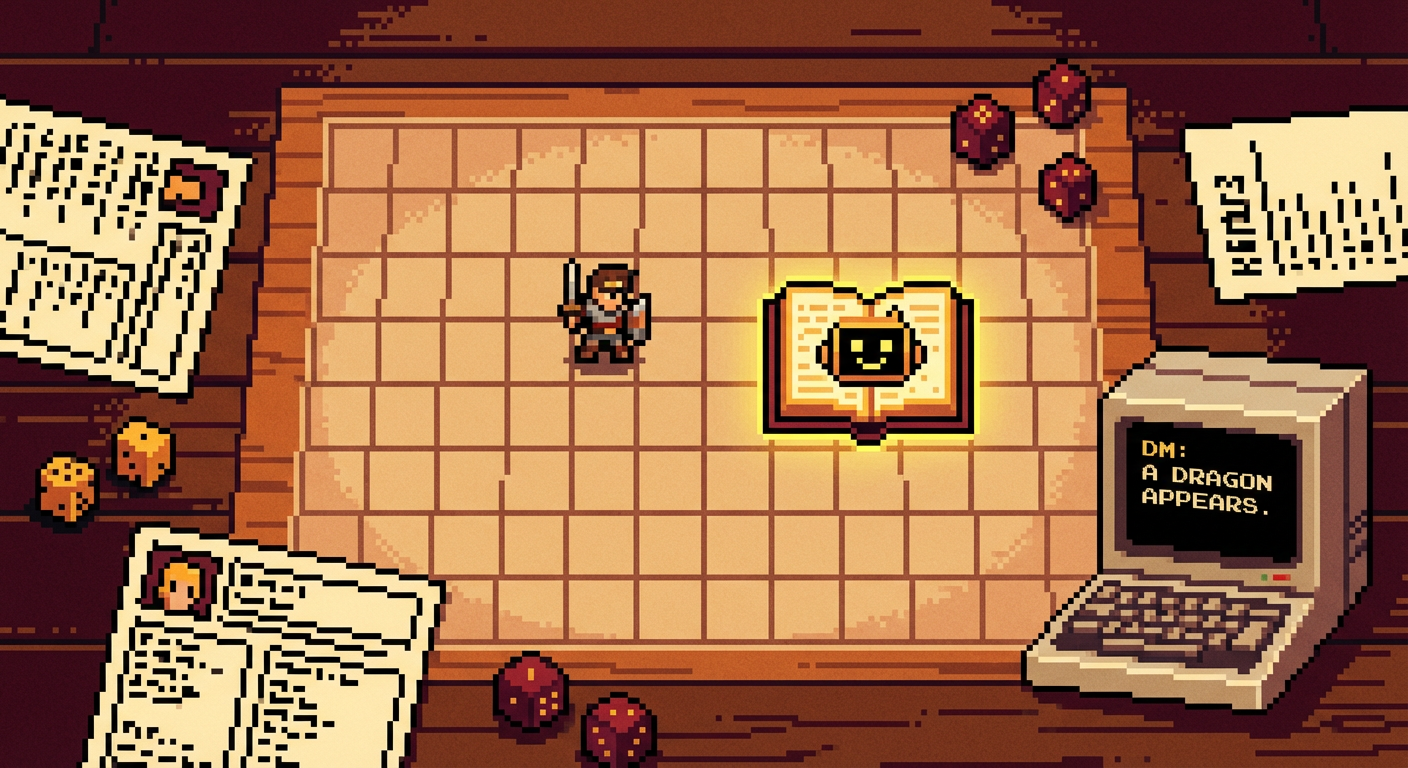
Perhaps the most exciting development in AI gaming isn’t happening on dedicated platforms at all. Tabletop RPG communities have embraced large language models as digital dungeon masters for solo play sessions, fundamentally changing how people experience classic games like Dungeons & Dragons. This trend represents a perfect marriage of traditional gaming structure with AI flexibility, allowing players to enjoy full campaigns without coordinating schedules with human game masters.
These AI dungeon masters are great at generating consistent world-building, managing multiple NPCs, and creating dynamic encounters that respond to player actions. Unlike human DMs, AI never gets tired, never cancels sessions, and can instantly generate new content when players venture off the expected path. The technology has reached a sophistication level where it can maintain campaign continuity across dozens of sessions, tracking character progression and plot developments with remarkable consistency.
The implications extend beyond convenience. AI dungeon masters democratize access to high-quality tabletop experiences for players who lack local gaming groups or struggle with social anxiety. They also work as training tools for aspiring human DMs, providing examples of narrative techniques and encounter design. This application represents AI gaming at its most practical and transformative.
Disrupting Visual Novels and Choose Your Own Adventure
AI-generated branching narratives pose a real threat to traditional visual novel and Choose Your Own Adventure formats. While these established genres rely on carefully crafted, finite story trees, AI systems can generate virtually unlimited narrative branches in response to player input. This capability doesn’t just expand player choice—it fundamentally reimagines what interactive fiction can be.
Traditional visual novels excel at polished presentation and carefully plotted character arcs, but they’re inherently limited by development resources. Even the most ambitious visual novel can only include a few dozen meaningful story branches. AI-driven narratives, by contrast, can explore thousands of potential storylines, creating unique experiences for every player. This isn’t necessarily better, but it’s undeniably different and appealing to players seeking maximum agency.
The disruption runs deeper than just story quantity. AI narratives can incorporate elements from multiple genres simultaneously, shifting between romance, mystery, action, and horror based on player preferences. They can adapt difficulty and complexity in real-time, ensuring that both casual and hardcore players find appropriate challenges. This adaptability makes AI-driven stories more personally relevant than static alternatives.
The Technical Foundation: Why Now?
The current AI RPG boom isn’t accidental. Recent advances in transformer architecture and training methodologies have finally made real-time narrative generation both feasible and compelling. Modern language models understand context, maintain character consistency, and generate coherent long-form content at speeds that enable smooth gameplay experiences. These technical capabilities crossed a critical threshold around 2019, making AI Dungeon’s success both possible and inevitable.
Equally important is how accessible AI technology has become. Open-source models and accessible APIs mean that small development teams can now build sophisticated AI gaming experiences without massive technical infrastructure. This accessibility has sparked innovation across the industry, with new platforms and approaches emerging regularly. The barrier to entry continues dropping, which suggests that AI-driven gaming will become increasingly common and diverse.
The convergence of improved AI capabilities and broader technical accessibility creates perfect conditions for continued growth. As models become more sophisticated and hardware costs decrease, we should expect AI-powered interactive fiction to become a standard gaming category rather than an experimental curiosity.
The AI RPG revolution has moved beyond proof-of-concept into genuine market disruption. Whether you’re drawn to Character.AI’s social focus, NovelAI’s creative freedom, or the emerging world of AI dungeon masters, these platforms represent the future of personalized, limitless storytelling. What’s your experience with AI-driven interactive fiction? Which platforms have delivered the most compelling experiences for your gaming preferences?